

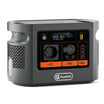
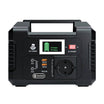

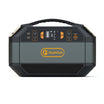
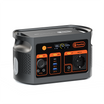


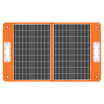
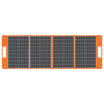


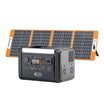

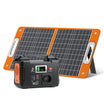

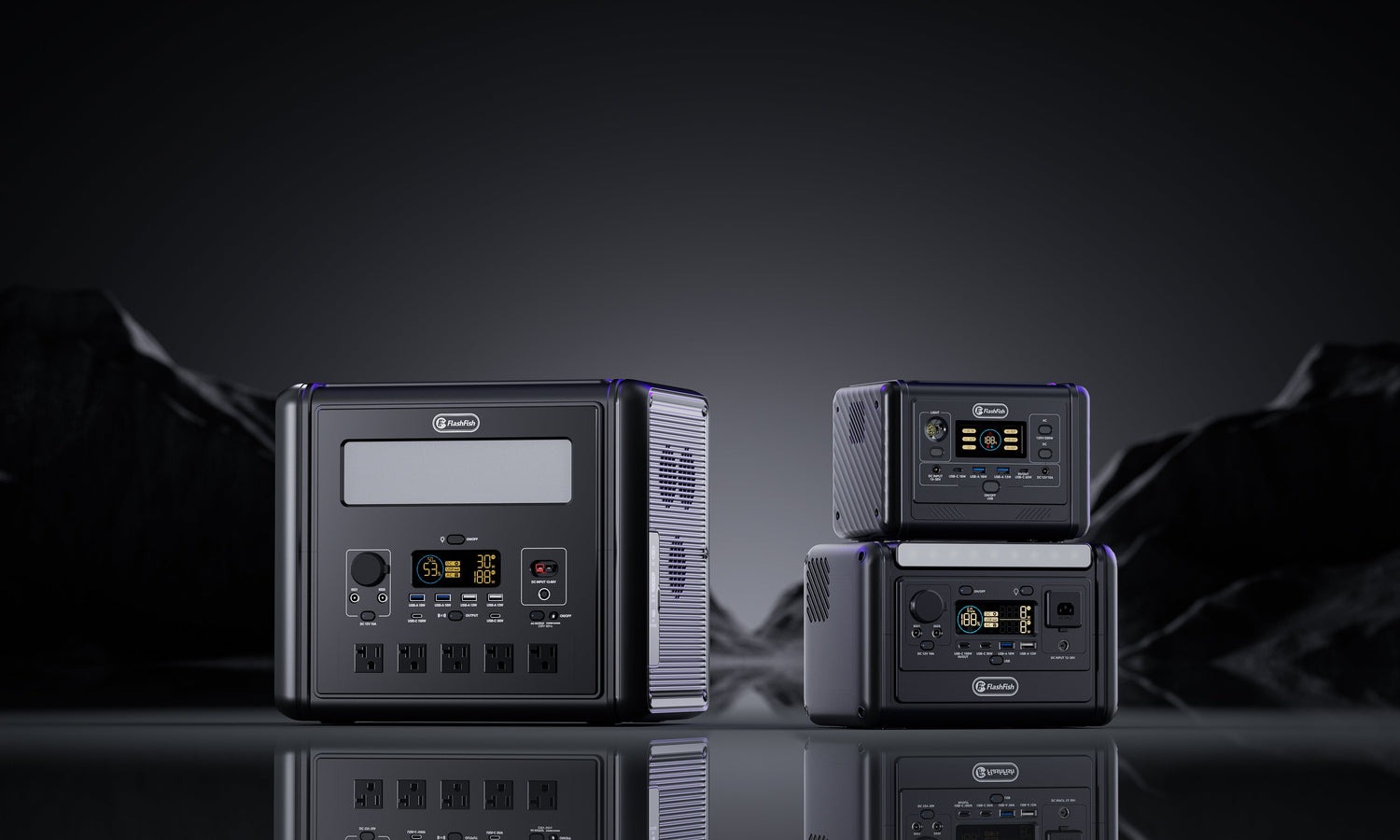
Short answer: FlashFish can be a practical EcoFlow RIVER alternative when the buyer wants a clear, selected-load camping setup and the FlashFish model matches the device list. EcoFlow RIVER 3 Plus is the stronger fit when the buyer specifically wants its official ecosystem features, expandable battery path, app-led platform or sub-10ms UPS claim.
This is not a universal winner-takes-all comparison. The useful question is narrower: for camping phones, camera batteries, lights, a laptop adapter, a small router or selected campsite accessories, which class of station should a Europe buyer shortlist?
The fair-alternative framework
| Buyer priority | EcoFlow RIVER 3 Plus official position | FlashFish comparison lens | Decision rule |
|---|---|---|---|
| Compact base capacity | EcoFlow lists RIVER 3 Plus at 286Wh. | E200 is a lighter 151Wh class; E103 is a 179.2Wh compact class; T1200S is a much larger 768Wh class. | Choose by required energy reserve, not by brand name alone. |
| AC output | EcoFlow presents a 600W output class for RIVER 3 Plus. | E200 is 200W modified sine; E103 is 300W pure sine; T1200S is 1200W pure sine. | Use the highest labelled AC load to choose the class. |
| Expansion ecosystem | EcoFlow states RIVER 3 Plus can expand with EB300 or EB600 extra batteries. | The checked FlashFish compact examples are simpler standalone choices; T1200S is the step-up station rather than an expansion module. | Pick EcoFlow if modular expansion is central to the plan. |
| UPS-style continuity | EcoFlow advertises a less-than-10ms UPS feature on the official page. | This article does not claim equivalent FlashFish transfer performance for compact models. | Pick the product with the published continuity feature if interruption tolerance matters. |
| Simple selected-load camping | Good fit if the buyer values the RIVER platform and feature set. | Good fit when the load list maps cleanly to E200, E103 or T1200S output and carry tradeoffs. | Choose the smallest station that passes the load and charging checks. |
How FlashFish models can fit the alternative shortlist
| FlashFish model | Product-source facts | Best camping fit | When to step away |
|---|---|---|---|
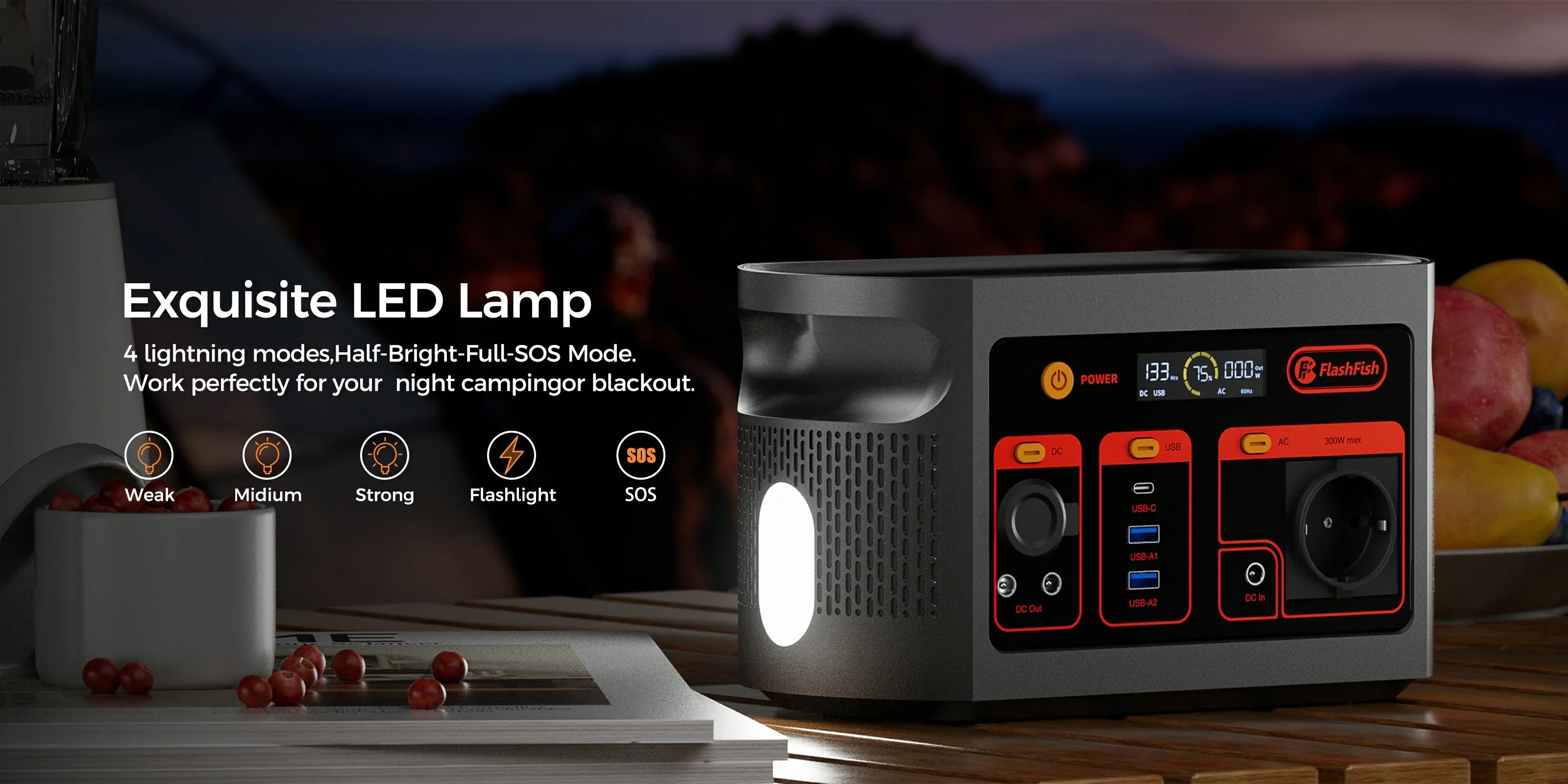
| E200 | 151Wh, lithium-ion, 200W modified sine AC, 400W peak, 40W max solar/DC input and 1.85kg. | Very light electronics, phone/camera charging and simple low-watt trips where carry weight matters. | When the device needs pure sine output, higher AC output or faster supported input. |
| E103 | 179.2Wh, 300W pure sine AC, 90W max DC charging input and 3kg. | A compact pure-sine choice for users who want more AC headroom than E200 without moving to a large station. | When the buyer requires a published expansion battery ecosystem or UPS-class transfer claim. |
| T1200S | 768Wh LiFePO4, 1200W pure sine AC, 2400W peak, 400W solar input and 12.45kg. | Longer camping weekends, shared gear or higher selected loads where compact models are undersized. | When the goal is pocketable carry weight or a small table-top station. |
| T2000 | 1536Wh LiFePO4, 2000W pure sine AC, 4000W peak, 600W solar input, 100W USB-C and 19.2kg. | Higher-output selected loads or larger group setups. | When the buyer mainly needs a RIVER-size compact station. |
Camping electricity changes the decision
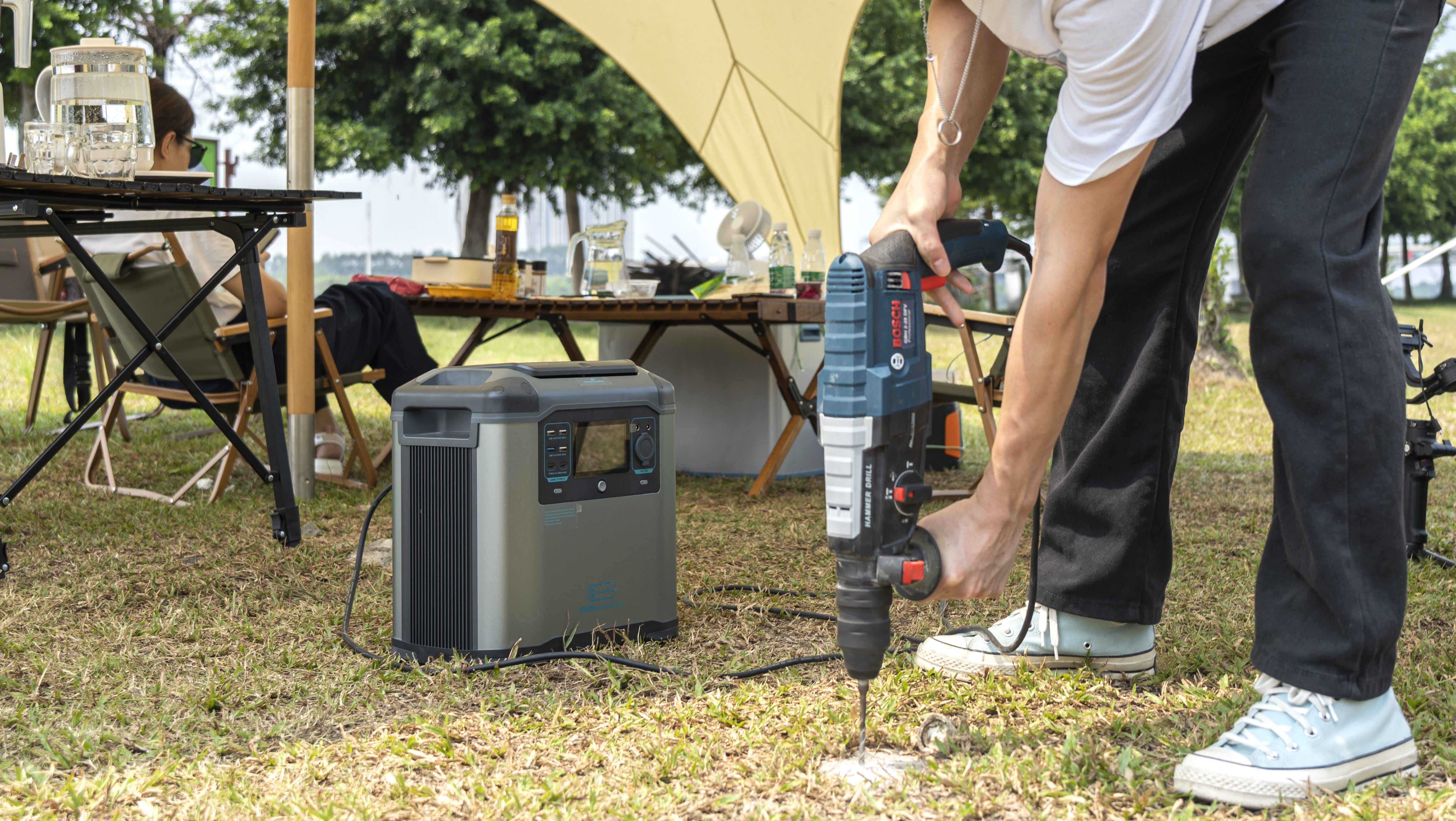
Many Europe campsites provide mains hookup, but that does not make a portable station irrelevant. The Caravan and Motorhome Club explains that many Club sites use a 16A maximum supply and that total appliance draw at the pitch must stay within the limit. A portable station can help keep small personal electronics organized, reduce cable dependence in some setups and provide selected-load reserve away from the pitch.
It should not be used as a workaround for unsafe cabling. Electrical Safety First advises avoiding overloaded extension leads, daisy-chained leads and cable reels left wound when they should be unwound.
When FlashFish is the better shortlist path
- You already know the device list and it fits one of the FlashFish output classes above.
- You want a simpler standalone station rather than a modular battery ecosystem.
- You value a very light station for basic charging, making E200 relevant, or you need a larger selected-load reserve, making T1200S or T2000 relevant.
- You are comparing a budget-conscious alternative but are not relying on unverified sale prices or independent awards.
When EcoFlow RIVER 3 Plus may fit better
- You specifically want the official RIVER ecosystem and expansion batteries.
- You need the published sub-10ms UPS feature and your device can be evaluated against that category.
- You want the EcoFlow software/platform experience.
- You prefer the 286Wh, 600W base class rather than either a smaller FlashFish compact model or a bigger T1200S-style step-up.
A practical campsite shortlist process
- List must-have devices: phones, camera batteries, lights, laptop, router, fan or cooler.
- Mark which devices need AC and which can use USB or DC.
- Compare the highest AC load with continuous AC output.
- Compare the desired reserve with Wh capacity, leaving a buffer for losses.
- Check charging input and solar variability if using panels.
- Decide whether platform features, app control, expansion batteries or UPS-style behavior matter enough to outweigh simpler standalone fit.
FAQ
Is FlashFish always cheaper than EcoFlow?
No fixed price advantage is claimed here. Compare current prices for the same package contents, destination, taxes and delivery conditions. Promotions and availability can change.
Is E103 the same class as EcoFlow RIVER 3 Plus?
No. E103 is a smaller 179.2Wh, 300W compact class in the product-source data, while EcoFlow lists RIVER 3 Plus at 286Wh and a 600W output class.
Which FlashFish model is closest for small camping electronics?
E200 and E103 are compact options for low-power electronics. T1200S is a larger step-up when the user needs much more output and reserve.
Should I choose EcoFlow if I need expansion batteries?
Yes, if modular expansion is a core requirement, use EcoFlow's official RIVER 3 Plus expansion information as part of the buying decision.
Can I use a portable station instead of campsite hookup?
Sometimes for selected low or moderate loads, but do not treat it as permission to ignore campsite rules, cable ratings or appliance limits.
Sources and review notes
- FlashFish product-source bundle, accessed 14 July 2026, for E200, E103, T1200S and T2000 product facts and blank-field boundaries.
- Europe Shopify discovery, accessed 14 July 2026, for active Europe-store URLs and store scope.
- EcoFlow Europe RIVER 3 Plus product page, accessed 14 July 2026, for official 286Wh, expansion, output and UPS-feature positioning.
- Caravan and Motorhome Club mains hookup guidance, accessed 14 July 2026, for campsite electric-hookup limits and load awareness.
- Electrical Safety First extension-lead guidance, accessed 14 July 2026, for cable and overload cautions.
- European Commission JRC PVGIS user manual, accessed 14 July 2026, for solar variability context.



Laat een reactie achter
Deze site wordt beschermd door hCaptcha en het privacybeleid en de servicevoorwaarden van hCaptcha zijn van toepassing.