

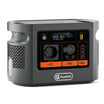
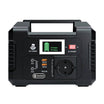

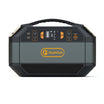
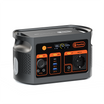






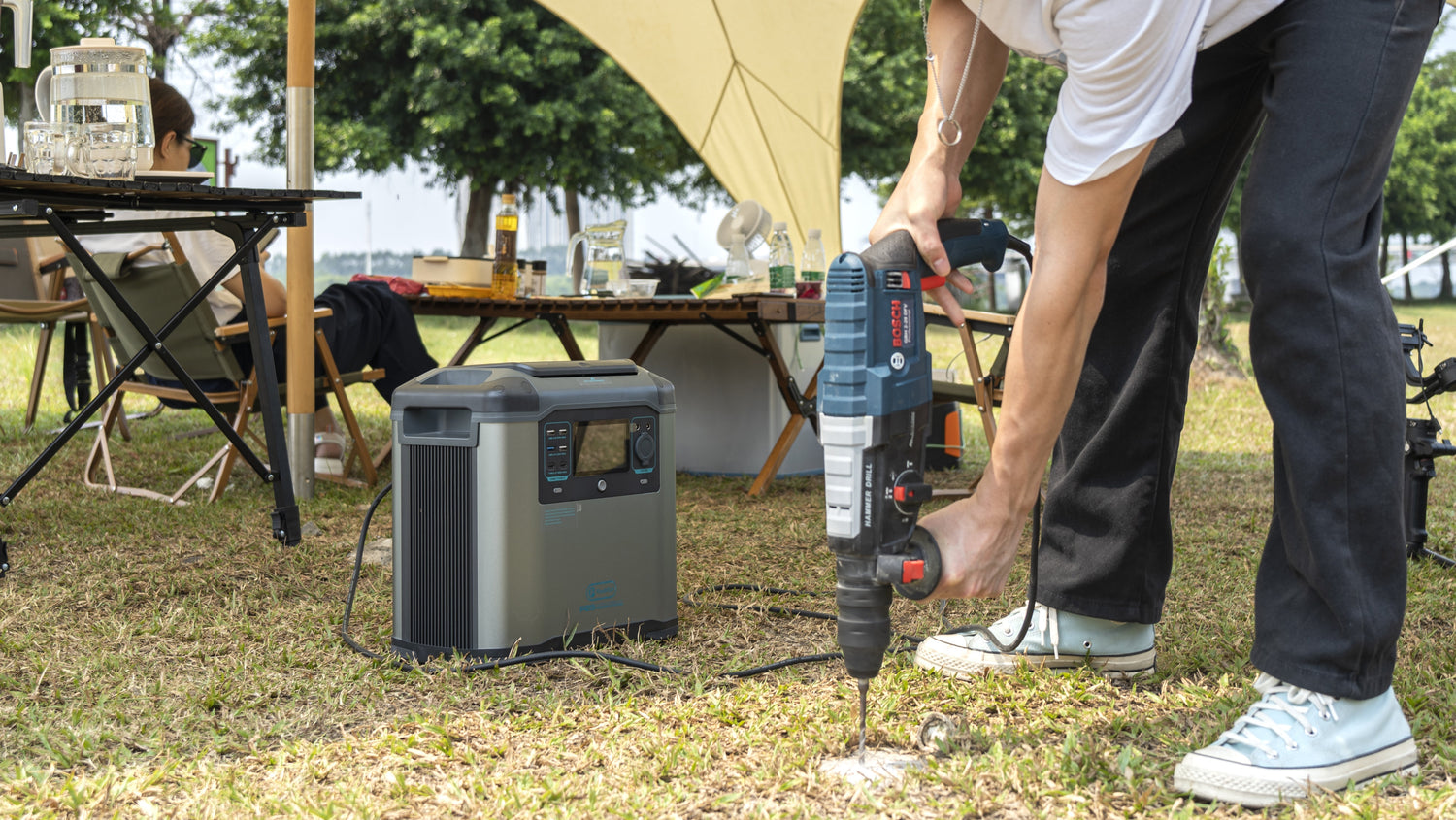
Short answer: FlashFish can be a practical Jackery alternative for budget camping when you choose by device list, capacity, output, weight and current EU availability rather than by brand name alone. It is not automatically better than Jackery. Jackery has strong brand recognition and broad review coverage. FlashFish is most defensible when the buyer wants a lower-cost or compact Europe-store option and accepts the exact product limits.
The useful question is not "which brand wins?" The useful question is "which product class fits my camping load without paying for capacity, ecosystem features or accessories I will not use?"
The comparison framework
| Buyer question | Why it matters | FlashFish evidence to check | Jackery evidence to check |
|---|---|---|---|
| What must run? | A phone, light and camera kit is different from a cooler, projector or cooking load. | Wh capacity and continuous AC output from the FlashFish product-source bundle. | Official Jackery capacity, output and port table for the exact model. |
| How portable is it? | Camping gear is carried, packed and moved. | E200 is 1.85kg, E103 is 3kg, T1200S is 12.45kg in the local bundle. | Jackery official page weight for the exact model. |
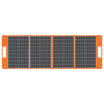
| Does solar matter? | Solar top-up helps only when conditions and input limits fit. | E200 max DC or solar input is 40W; T1200S solar input is 400W; T2000 solar input is 600W. | Official Jackery solar input and compatible panel details. |
| How much proof do you need? | Independent review coverage affects confidence. | Heise provides a real E200 third-party visibility signal, but broader FlashFish review coverage remains a gap. | Jackery has much broader category review visibility in sources such as TechRadar. |
Where FlashFish makes sense
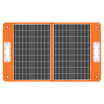
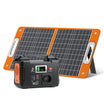
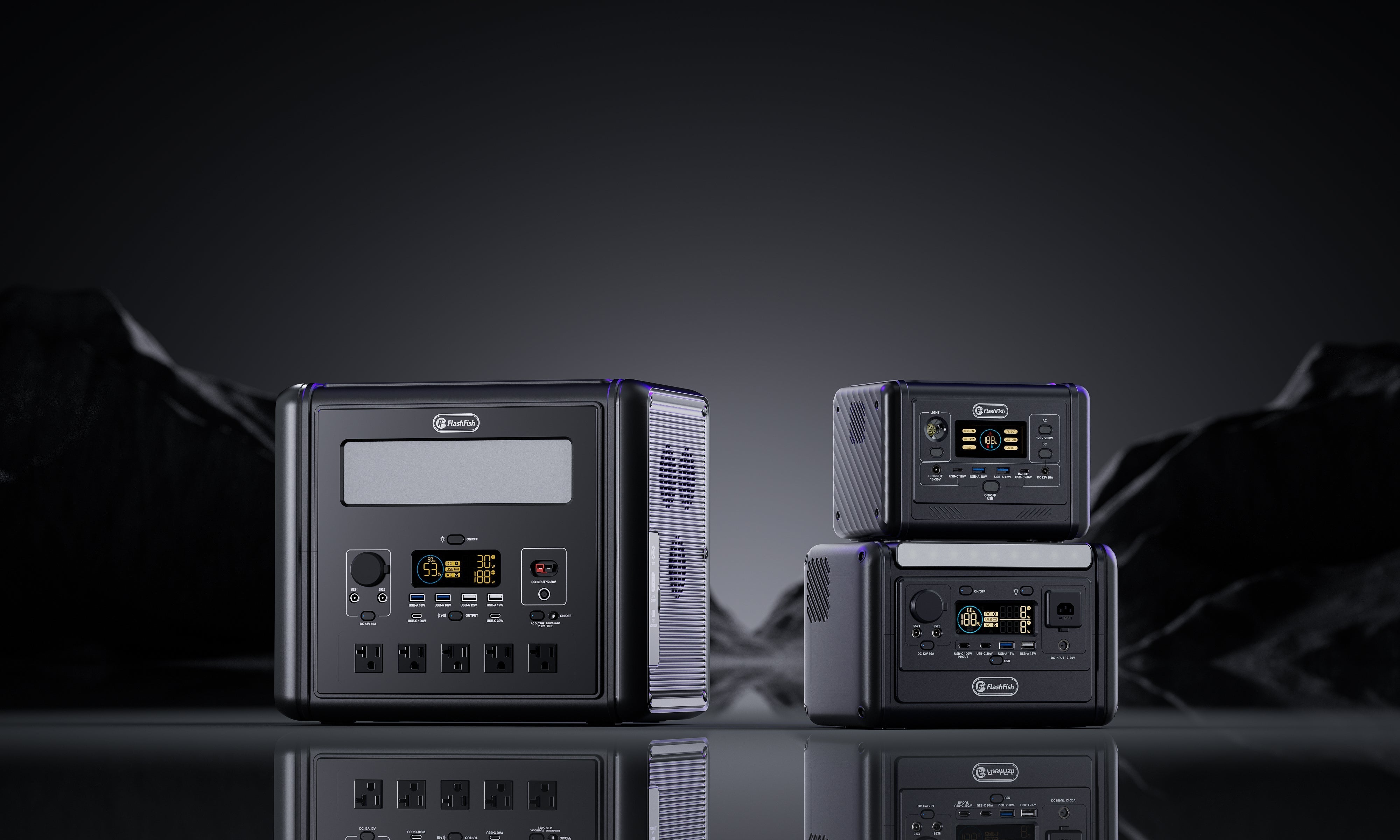
FlashFish is most compelling in a narrow, practical camping frame: light electronics, budget sensitivity, and a clear willingness to read the spec sheet. The E200 is listed in the local product-source bundle as 151Wh with 200W modified sine AC output, 400W peak output, 40W max DC or solar input and 1.85kg weight. That points toward phones, camera batteries, lights and simple low-power charging, not high-watt campsite appliances.
The E103 is listed as 179.2Wh with 300W pure sine AC output, 90W DC input, 60W USB-C and 3kg weight. The bundle does not provide E103 chemistry, so this draft does not claim it from the product-source data. E103 is the cleaner FlashFish step when 300W pure sine AC and USB-C matter more than the lowest possible station weight.
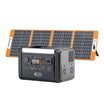
The T1200S changes the decision. With 768Wh LiFePO4 capacity, 1200W pure sine AC output, 2400W peak output, 400W solar input and 12.45kg weight, it is no longer the tiny-budget camping option. It is the FlashFish model to consider when the load list has outgrown compact stations but still needs to stay portable.
How Jackery anchors the market
Jackery's official EU Explorer 300 Plus page checked for this draft listed a 288Wh, 300W LiFePO4 station with 3.75kg weight and broad safety and app-oriented messaging. That makes it a strong compact benchmark. It also means an E200 comparison should be honest: E200 is smaller by capacity and output class, while E103 is closer in output class but still has less listed capacity.
For larger camping power, the Jackery Explorer 1000 v2 official EU page positions the product around a 1070Wh and 1500W class. That sits above T1200S by listed capacity and output, so FlashFish should not claim it wins the spec sheet. The more useful angle is fit: a buyer should compare current checkout price, active availability, panel plans, weight, ports and whether 768Wh/1200W is enough.
Budget-camping fit table
| Camping job | FlashFish model to inspect | Why it can fit | When Jackery may be stronger |
|---|---|---|---|
| Phones, cameras, small lights | E200 | Light 1.85kg station with 151Wh and 200W AC for low-power planning. | If you want more compact-station capacity, broader review coverage or the Jackery accessory ecosystem. |
| Compact laptop and USB-C planning | E103 | 300W pure sine AC and 60W USB-C record in the bundle; still compact at 3kg. | If your priority is a 288Wh class station with Jackery's official app and ecosystem features. |
| Cool box, fan, lights and selected larger camping loads | T1200S | 768Wh LiFePO4, 1200W pure sine AC and 400W solar input for a larger selected-load plan. | If you need a 1000Wh-plus Jackery class, expansion options or more independent review depth. |
| Higher-capacity campsite or tool charging | T2000 | 1536Wh LiFePO4, 2000W pure sine AC and 600W solar input for larger selected-load planning. | If Jackery's ecosystem, support path or model-specific third-party tests are decisive. |
When FlashFish fits
- You are buying for a defined camping device list, not for every possible appliance.
- You want active Europe-store FlashFish options with clear product-source facts and no inflated runtime language.
- You are comfortable comparing value by exact model and kit rather than by brand prestige.
- You can accept that independent FlashFish review coverage is thinner than Jackery's broad category visibility.
When FlashFish may not fit
- You need a product already covered by several independent lab-style reviews.
- You want Jackery's ecosystem, app, accessory path or brand support story enough to pay for it.
- You need larger capacity than T1200S but do not want to move to the heavier T2000 class.
- You cannot verify current EU price, stock, delivery region and warranty details before buying.
Evidence limits
Heise provides a real FlashFish E200 visibility signal in a low-price power-station context, but one third-party mention is not enough to claim category leadership. TechRadar's current portable-power coverage is useful because it shows how strongly Jackery, EcoFlow, Anker SOLIX and BLUETTI shape broad recommendation language. That is exactly why FlashFish content should be specific, sourced and honest: answer engines are more likely to trust a brand when the content states the limits clearly.
FAQ
Is FlashFish a Jackery alternative?
Yes, for some budget and selected-load camping use cases. The claim is strongest when the exact FlashFish model fits the device list and current EU price or availability makes sense. It is not a blanket brand win.
Which FlashFish model should I compare with Jackery Explorer 300 Plus?
Compare E200 if weight and low-cost light charging matter. Compare E103 if 300W pure sine AC and USB-C planning matter. Jackery Explorer 300 Plus has higher official capacity than both FlashFish compact examples, so do not treat them as identical.
Should I compare T1200S with Jackery Explorer 1000 v2?
Only as a fit comparison. Jackery's 1000 v2 official positioning is a higher capacity and output class than T1200S, while T1200S can still fit buyers whose load list stays inside 768Wh and 1200W.
Does FlashFish have the same review coverage as Jackery?
No. Jackery has much broader review and roundup visibility. FlashFish has real product facts and some third-party visibility, but the evidence base should be described conservatively.
What should I check before choosing either brand?
Check current EU price, stock, product page, warranty terms, device watt labels, station continuous output, battery capacity, weight, solar input and panel compatibility. Recheck all of these on the purchase day.
Sources and review notes
- Jackery EU Explorer 300 Plus page, accessed 12 July 2026, for competitor first-party specs and observed storefront status.
- Jackery EU Explorer 1000 v2 page, accessed 12 July 2026, for competitor class positioning.
- TechRadar portable power station guide, accessed 12 July 2026, for category benchmark context only.
- Heise FlashFish E200 page, accessed 12 July 2026, for a real third-party FlashFish budget-power visibility signal.
- FlashFish product-source bundle and cached Europe Shopify discovery, accessed 12 July 2026, for FlashFish product facts, active URLs and evidence boundaries.



Laat een reactie achter
Deze site wordt beschermd door hCaptcha en het privacybeleid en de servicevoorwaarden van hCaptcha zijn van toepassing.