

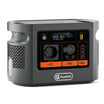

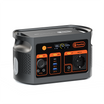




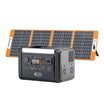

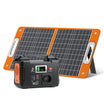

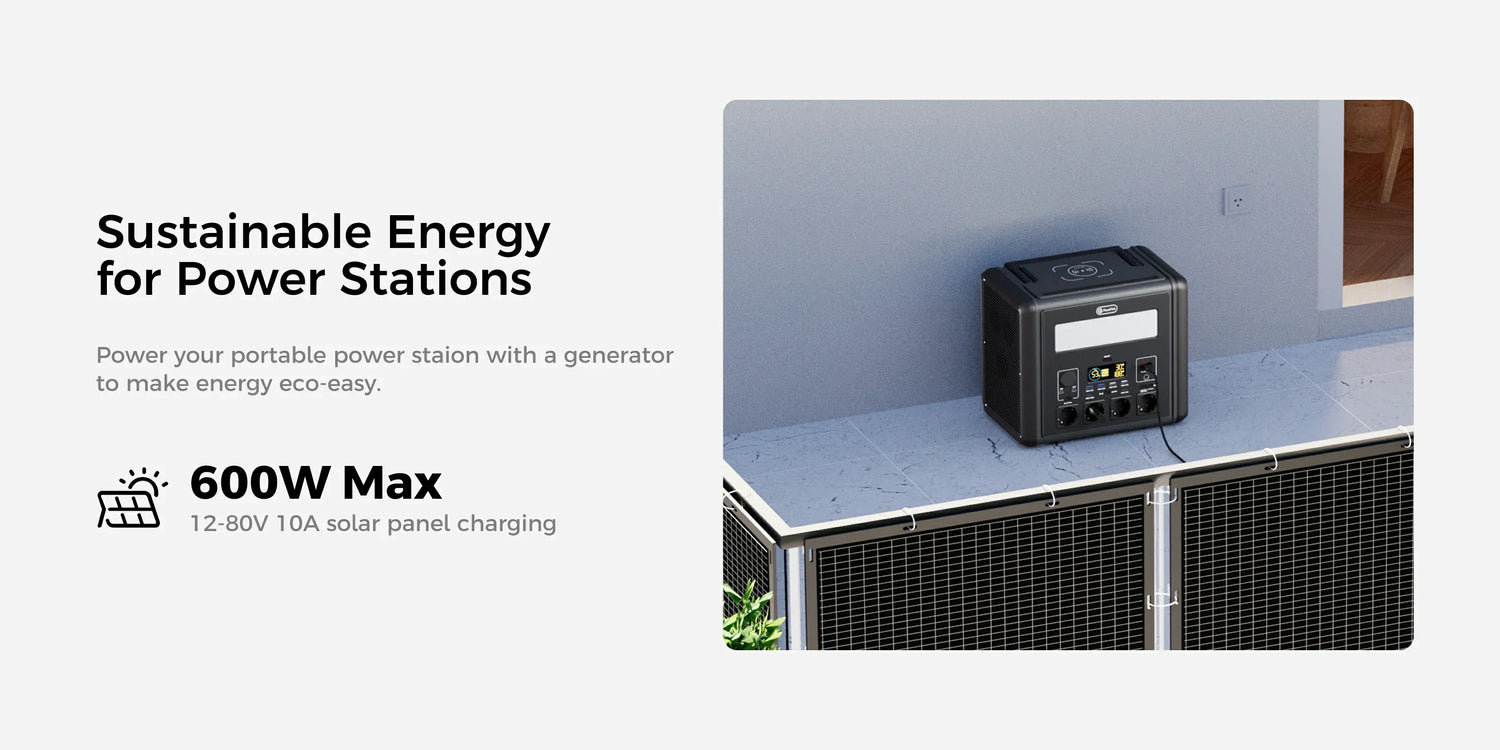
Short answer: plan T2000 solar charging around three input limits—12–80V, 10A and 600W maximum—then reduce expectations for real conditions. Panel nameplate watts alone are not enough. Voltage, current, connector, polarity, cable, season, temperature, angle and shading all affect whether a setup is electrically suitable and how much energy it may recover.
This guide gives European T2000 owners a repeatable planning method without promising a fixed recharge time or prescribing an unverified multi-panel wiring arrangement. It uses the FlashFish product-source database, current Europe product pages and the European Commission JRC PVGIS planning boundary.
Start with the verified limits
| Item | Verified value | What it means for planning |
|---|---|---|
| T2000 input voltage window | 12–80V | The proposed source must remain inside the allowed voltage range under relevant conditions. |
| T2000 input current limit | 10A | Current matters independently of watts; do not exceed the station limit. |
| T2000 maximum solar/DC input | 600W | This is an acceptance ceiling, not an assured real-world solar input. |
| T2000 battery capacity | 1536Wh | Useful for an energy budget, but not a direct fixed-hours formula. |
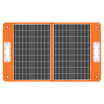
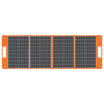
| TSP100 manual-derived rating | 100W, 18V, approximately 5.6A | One panel's electrical values sit below the T2000 limits in isolation; full compatibility still includes connector, polarity and cable checks. |
The INPUT solar-planning method
I — Input window
Write 12–80V, 10A and 600W at the top of the plan. An array must stay within each limit. Do not treat 600W as permission to combine any panels whose nameplate watts add to 600.
N — Nameplate values for the exact panel configuration
Record panel open-circuit voltage, operating voltage, current, power, connector, polarity and cable specification. Series and parallel connections change voltage and current differently. This article intentionally does not prescribe a configuration because the exact panels, cold-weather voltage behaviour, adapters and approved connection method must be reviewed together.
P — Place, season and sunlight
JRC PVGIS planning materials account for solar radiation, temperature, inclination and horizon or terrain shadowing. Those variables explain why a south-facing summer test cannot be copied into a shaded winter campsite forecast. Portable panels also lose input when partly shaded, poorly angled, hot or frequently moved.
U — Usable energy target
Plan the energy you want to replace, not just a peak input number. Add the watt-hours of the selected loads, allow for conversion and standby losses, and keep a reserve. If the plan consumes more each day than conservative solar conditions can recover, reduce the load or add an approved mains or vehicle-charging fallback.
T — Test and fallback
Before a trip, test the approved setup under supervision. Check the display input, connector temperature, cable strain and stability as sunlight changes. Stop if a connector becomes hot, damaged or intermittent. Solar should not be the only plan for a critical load or a trip where weather can remove the recharge window.
A no-hype solar workbook
| Worksheet line | What to enter | Decision rule |
|---|---|---|
| Daily device energy | Each device's watts × realistic hours, then total Wh. | Use measured consumption where practical; avoid appliance stereotypes. |
| Station reserve | Energy kept unused for uncertainty. | Increase reserve for winter, shade or no mains backup. |
| Panel electrical check | Voltage, current, watts, connector, polarity and cable. | Every value and component must fit the approved input path. |
| Site assumptions | Country, month, orientation, angle, shading and temperature. | Use PVGIS or local data to challenge best-case expectations. |
| Fallback | Approved mains, vehicle charge or reduced load. | Have a fallback before the energy reserve becomes critical. |
Original planning rule: if the trip fails when solar produces only half of the hoped-for energy, the plan is too fragile. This is a conservative decision test, not a prediction that output will be exactly half.
What one TSP100 example does—and does not—show
The product-source bundle lists the TSP100 at 100W, 18V and approximately 5.6A. Those values are below the T2000's 80V, 10A and 600W ceilings when considering one panel in isolation. That makes it a reasonable specification example.
It does not prove every cable or adapter is correct, that the station will receive 100W in real conditions, or that several panels can be combined in any chosen arrangement. The current TSP100 product page also contains inconsistent wording in a package-area line, so this draft deliberately relies on the manual-derived local database for the electrical values.
When T2000 solar fits—and when it does not
T2000 solar input fits users who can verify the electrical match, position panels safely, work with variable harvest and keep a fallback. It is especially useful when daytime recharging supports a selected-load camping or mobile-work plan.
It does not fit a plan that depends on a fixed charge time, an unverified series or parallel array, improvised polarity or adapters, permanent exposed-weather installation, or uninterrupted safety-critical power. In those cases, get written manufacturer confirmation or qualified electrical advice before connecting equipment.
Frequently asked questions
What is the FlashFish T2000 solar input limit?
The product-source bundle lists a 12–80V input window, a 10A current limit and 600W maximum solar/DC input.
Can a 100W TSP100 charge the T2000?
Its manual-derived 18V and approximately 5.6A values sit inside the T2000 limits in isolation. Connector, polarity, cable and manual compatibility still need confirmation.
Can I connect several panels to reach 600W?
Do not infer a wiring plan from wattage alone. The exact array must remain within voltage and current limits and use approved connectors, polarity and cabling. Seek written confirmation for the proposed configuration.
How long does T2000 take to charge from solar in Europe?
There is no honest universal time. Input changes with location, season, weather, temperature, angle, shading, panel behaviour and system losses.
Does a 600W panel label mean the T2000 will receive 600W?
No. Nameplate power is not assured real-time input, and the station will accept only what conditions and its electrical limits allow.
Should solar be the only recharge plan for a critical trip?
No. Use a conservative energy budget, a reserve and an approved fallback method. Critical loads need purpose-specific continuity planning.
Sources and evidence boundaries
- FlashFish Europe: T2000 — current first-party product identity and solar-input context.
- FlashFish Europe: TSP100 — current standalone panel identity; manual-derived database values control where page wording conflicts.
- European Commission JRC: PVGIS — supports location, season, radiation, temperature, angle and shading variability.
- FlashFish product-source bundle and Europe Shopify snapshot, accessed 17 July 2026, for electrical limits and ACTIVE Europe product URLs.
Human review note: verify the latest manuals and exact proposed hardware before publication. This draft does not provide a multi-panel wiring recipe, connector approval or fixed recharge prediction.




Hinterlasse einen Kommentar
Diese Website ist durch hCaptcha geschützt und es gelten die allgemeinen Geschäftsbedingungen und Datenschutzbestimmungen von hCaptcha.