

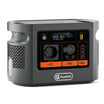
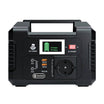

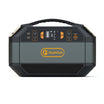
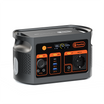






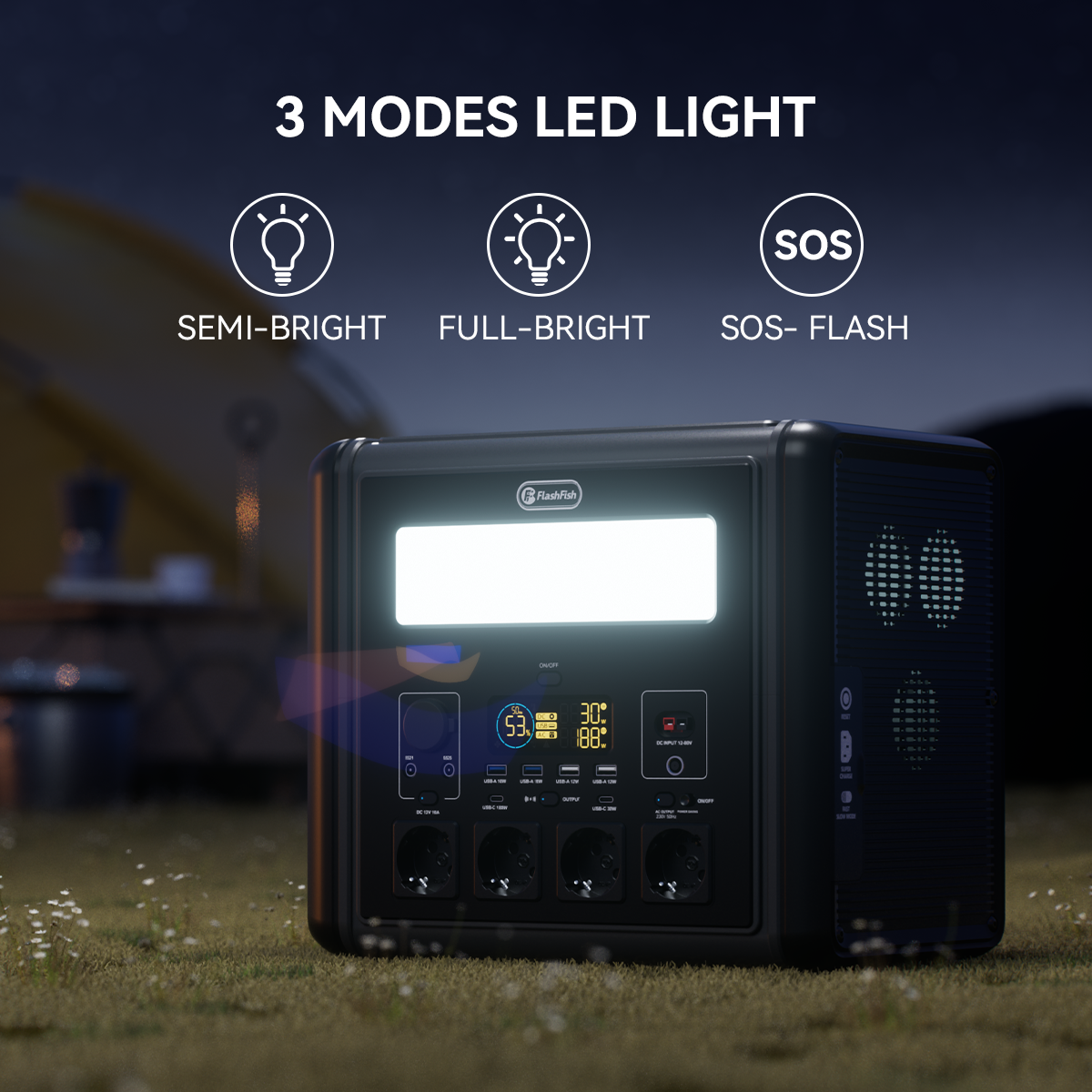
Short answer: FlashFish T2000 can be a practical shared camping power hub when the group appoints one coordinator, inventories every device, keeps simultaneous AC load below the verified 2000W limit, builds a watt-hour budget against 1536Wh and controls cables, weather and charging access. It is not a plug-anything-in promise.
Group trips fail differently from solo trips: one person adds a kettle, another leaves a cooler connected, phones arrive at 5%, and the only extension cable crosses a walkway. The solution is a shared operating plan, not a larger headline wattage.
Build one group gear roster
| Load group | Record before the trip | Decision rule |
|---|---|---|
| Phones, watches and camera batteries | Charger watts, cable, owner and charging priority | Schedule shared charging instead of leaving every adapter connected |
| Laptops, tablets and drones | USB-C profile or adapter maximum, battery count and job | Reserve direct USB-C for compatible higher-priority devices |
| Lighting | Total watts, hours, location and safe fallback torch | Keep independent personal lights even if the station has a built-in lamp |
| Coolers, fridges or pumps | Running watts, startup behaviour, duty cycle and temperature need | Do not use a fixed runtime chart; measure the actual device |
| Speakers and entertainment | Adapter watts, volume/duty pattern and quiet-hour rules | Make these the first loads to shed when the reserve falls |
| Kettles, cookers or heaters | Full nameplate watts, startup behaviour and campsite permission | High-heat loads need explicit approval and often dominate the budget |
The GROUP method
G — Gear roster and ownership
Give every device an owner and a purpose: essential, useful or optional. “Everyone’s chargers” is not a usable row. Record model, input requirement, cable and planned charging window. Keep medicine, emergency communications and other safety-critical needs on a separately approved continuity plan rather than relying on one leisure power station.
R — Rated and simultaneous watts
The local product-source bundle records T2000 at 2000W continuous AC and 4000W peak. Peak is short startup headroom, not a second continuous rating. Add the maximum watts of everything that might run together and leave margin for measurement error and startup behaviour. Confirm regional plugs and voltage from the current Europe manual; this article does not infer them from another regional manual.
O — Operating hours and watt-hours
For each load, multiply measured average watts by planned hours, then add the rows. Use the 1536Wh battery capacity as a starting store, not fully deliverable AC energy. Conversion, standby, temperature and device cycling reduce what reaches loads. Choose a reserve before the trip instead of spending the last percentage on optional entertainment.
A hypothetical roster might list 40W of lighting for five hours, 120Wh of shared small-device charging and a 50W average cooler for eight hours. The simple subtotal is 720Wh. This is a worksheet example, not a T2000 field result: real average power, losses, temperature, charging and reserve still need measuring.
U — User and charging rules
- One coordinator approves new connections and records starting/ending percentage.
- Label cables and allocate charging windows for each tent or family.
- Do not unplug another person’s essential load without agreement.
- Stop optional loads when the reserve threshold is reached.
- Keep a paper list so the plan still works when phones are flat.
T2000 includes a 100W USB-C output in the source record, which may let a compatible laptop or tablet avoid an AC adapter. Compatibility still depends on the device and cable charging profile.
P — Placement, protection and backup
The Camping and Caravanning Club highlights dampness, safe campsite electricity and site rules. Keep the station dry, stable, ventilated and away from sleeping bags, cooking heat, children and shared walkways. Do not assume weather resistance.
Electrical Safety First advises users to respect extension ratings, fully unwind reels and avoid daisy-chaining. Inspect plugs and leads before travel and each setup. If a route cannot avoid foot traffic, change the layout or follow the campsite’s approved protection method.
Plan solar as variable recharge
The product-source record lists up to 600W solar input for T2000. That is an input ceiling, not a promise of receiving 600W or restoring 1536Wh in a fixed time. Panel electrical compatibility, connectors, weather, shade, angle, temperature and campsite placement rules all matter. Confirm the exact approved panel arrangement in the current Europe manual.
Use solar input to extend the plan when conditions cooperate. Do not commit essential evening loads on the assumption that tomorrow will be sunny.
A pre-trip rehearsal
- Charge and inspect the station according to the manual.
- Connect only the verified trip devices in the planned combinations.
- Record simultaneous watts, any startup response and energy used over a realistic period.
- Check cable temperature, error messages and unexpected shutdowns; stop if anything is abnormal.
- Recalculate the trip budget with losses and a reserve.
- Pack independent lighting, communication and an early-load-shed plan.
A rehearsal reduces uncertainty but does not guarantee the same result at a colder, hotter or wetter campsite.
When T2000 fits
- The measured simultaneous total remains comfortably below 2000W.
- The group’s real energy log fits 1536Wh after losses and a reserve.
- One coordinator can enforce charging windows and load-shed rules.
- The site provides a dry, stable position and safe cable routes.
- The group accepts variable solar input and has independent essentials.
When T2000 does not fit
- Heat appliances or multiple devices bring the load near or above the limit.
- The group cannot control rain, condensation, public access or cables.
- The plan depends on one fixed runtime or perfect solar weather.
- A safety-critical or medical requirement has no separately approved continuity path.
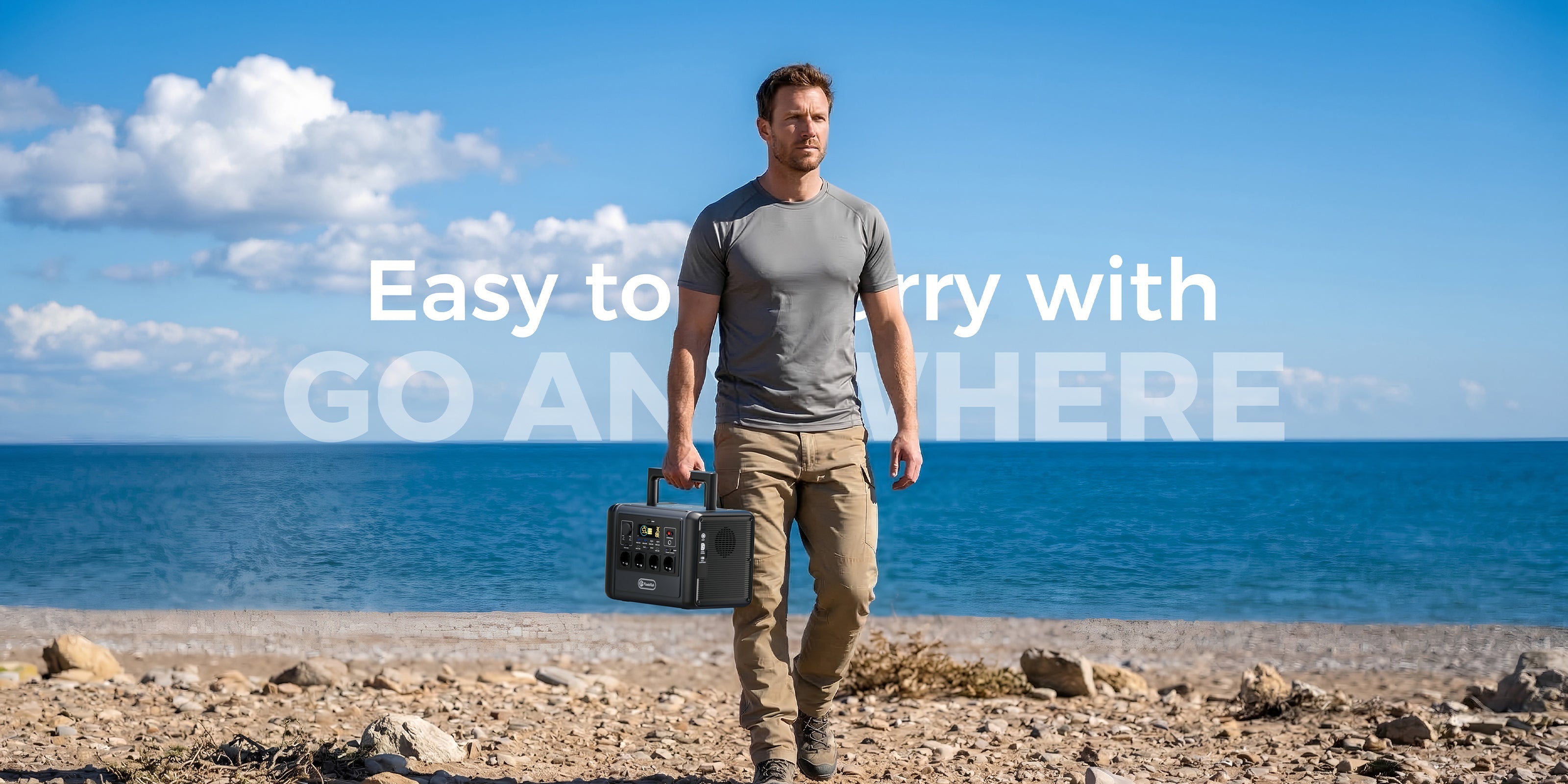
- The 19.2kg station cannot be carried and positioned safely.
See the current FlashFish T2000 Europe product page and compare other FlashFish portable power stations. Verify the regional manual, plugs and campsite rules before buying or travelling.
Frequently asked questions
Can one T2000 serve several camping families?
It may fit when one coordinator controls connections and measured simultaneous watts and daily energy remain inside the plan. More users do not increase the limits.
How long will T2000 last on a group trip?
There is no fixed answer without the device-by-device energy log, duty cycles, losses, temperature, charging input and reserve.
Can campers run kettles or cookers?
Check the exact appliance label and campsite rules. Heat appliances can consume much of the 2000W continuous limit and energy store.
Can T2000 stay in a sleeping tent?
Do not assume that. Follow the manual and campsite rules and keep power equipment dry, ventilated and away from unsafe cables or heat sources.
Should the group daisy-chain extension leads?
No. Use correctly rated, undamaged leads, fully unwind reels and control every cable route.
Will solar keep the group powered indefinitely?
No. Solar is variable and depends on compatible equipment and conditions. Treat it as recharge, not guaranteed balance.
Sources and evidence boundaries
- FlashFish Europe: T2000 and local product-source bundle — active identity and source-derived limits.
- Camping and Caravanning Club: electricity — dampness, campsite and rule-check boundaries.
- Electrical Safety First: extension leads — rating, reel and daisy-chain boundaries.
Human review note: this is a planning framework, not a campsite test, runtime guarantee, medical backup plan or site approval.




Dejar un comentario
Este sitio está protegido por hCaptcha y se aplican la Política de privacidad de hCaptcha y los Términos del servicio.