








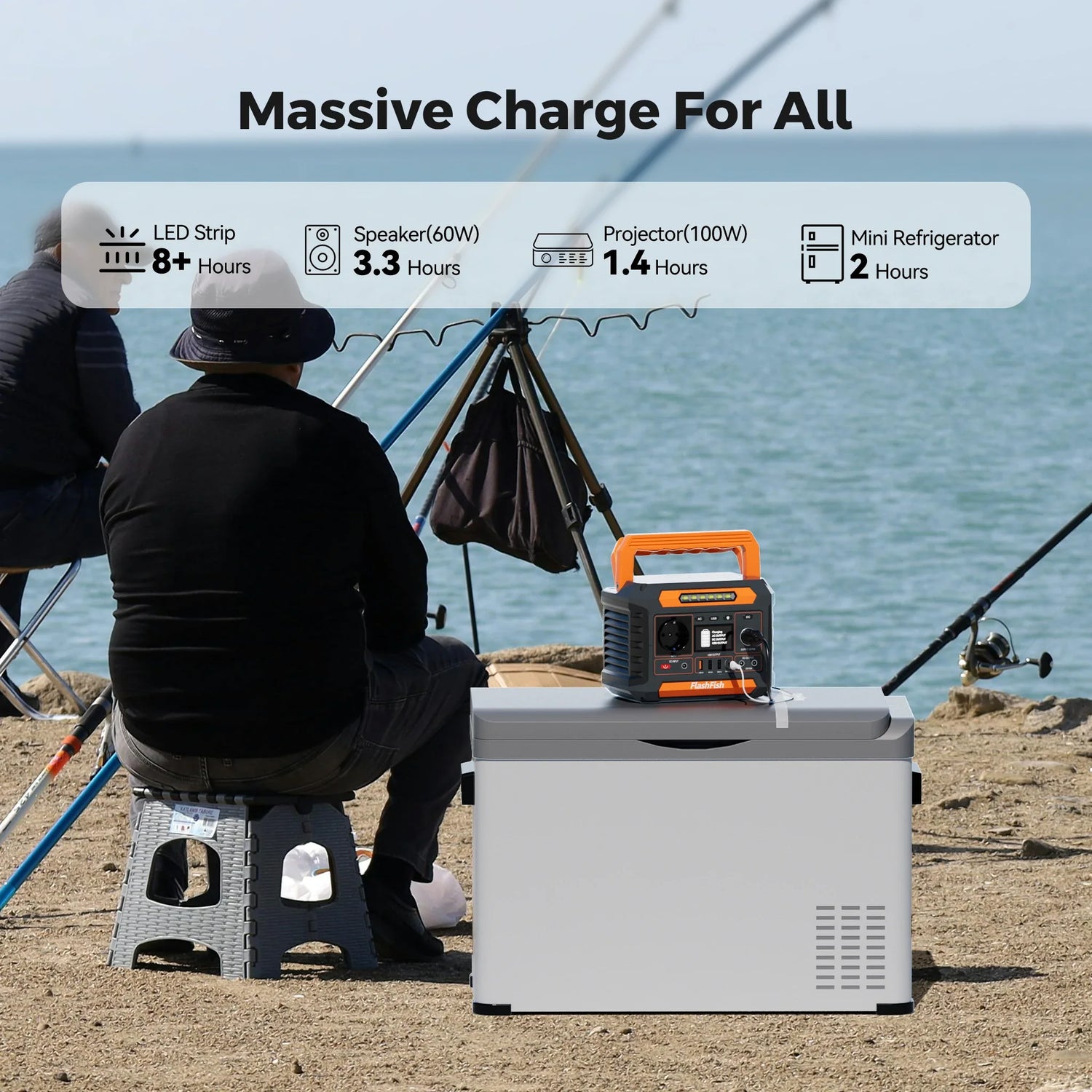
Short answer: pure sine wave output follows a smooth AC waveform similar to utility power, while modified sine wave output is a stepped approximation. Many simple loads may operate from modified sine, but compatibility varies. For laptops, audio equipment, variable-speed controls, motors or any device with a waveform requirement, check the device manual and prefer pure sine when uncertain.
What an inverter waveform describes
A portable power station stores DC energy in its battery. Its inverter converts that energy into AC for the station's sockets. “Pure sine” and “modified sine” describe the shape of that AC output, not the battery capacity or the maximum number of watts.
Eaton explains pure sine as a smooth, consistent waveform and simulated or modified sine as a stepped approximation. It also notes that the stepped form may be unsuitable for some devices, including equipment with active power-factor-correction power supplies.
Modified and pure sine wave compared
| Question | Pure sine wave | Modified sine wave |
|---|---|---|
| Waveform | Smooth AC curve | Stepped approximation |
| Device fit | Broader compatibility when voltage, frequency and watts also match | Device-by-device confirmation is more important |
| Possible symptoms of poor fit | Not eliminated; other compatibility issues can remain | Buzzing, excess heat, unstable operation or refusal to start may occur with some loads |
| What it does not tell you | Capacity, continuous watts, peak watts, port protocol and operating duration still require separate checks | |
Which devices need extra care?
Power supplies with active PFC
Some computer and electronics power supplies expect a smoother input waveform. Check the manufacturer specification rather than assuming every charger behaves the same way.
Motors, compressors and timing controls
These loads can respond differently to waveform shape and may also have startup demand. Confirm both the waveform requirement and startup watts.
Audio, radio and measurement equipment
Interference or audible noise can matter even when a device appears to switch on. Use the device maker's approved input requirements.
A five-step compatibility method
- Read the device input label for voltage, frequency and watts.
- Check its manual for pure-sine, UPS, inverter or generator requirements.
- Compare normal watts with the station's continuous output.
- Check documented startup demand for motors and compressors.
- Use the approved charger and stop if the device behaves abnormally or becomes unusually hot.
Where FlashFish E200 and E103 fit
| Product | Database waveform | Capacity / AC output | Practical fit |
|---|---|---|---|
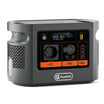
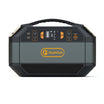
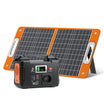
| FlashFish E200 | Modified sine | 151Wh / 200W continuous | Compact, simple-device planning where the connected equipment permits modified sine |
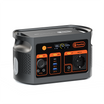
| FlashFish E103 | Pure sine | 179.2Wh / 300W continuous | Broader small-device AC compatibility when every other input requirement also matches |
E200 weighs 1.85kg and E103 weighs 3kg. Waveform is therefore one trade-off among output, capacity, ports, weight and the exact devices being powered. The local database does not provide E103 battery chemistry or peak output, so those fields are not part of this comparison.
When USB or DC may be the better route
If a phone, camera or laptop supports a compatible USB output, direct DC charging can avoid the AC waveform question. You still need to confirm the port's voltage, protocol and wattage. A USB-C connector alone does not prove compatibility.
Common mistakes
- Assuming pure sine automatically means enough watts.
- Assuming modified sine damages every device.
- Testing a device briefly and treating that as long-term compatibility proof.
- Ignoring the manufacturer's charger and input requirements.
- Confusing waveform with battery chemistry or capacity.
Frequently asked questions
Is pure sine always the better technical choice?
It generally offers broader AC compatibility, but the station must still match voltage, frequency, continuous watts, startup demand and ports.
Can a laptop charger run from modified sine?
Some may, while others can buzz, heat or reject the input. Check the charger or laptop manufacturer's inverter guidance.
Does modified sine change battery capacity?
No. Waveform and Wh capacity are separate specifications, although conversion and load behaviour can affect usable energy.
Can I judge waveform from the AC socket shape?
No. Socket type does not reveal inverter waveform. Use the product specification or manual.
Why compare E200 and E103 without declaring one universally better?
They differ in weight, capacity, output and waveform. The better fit depends on the connected devices and portability requirement.
Sources and evidence notes
- FlashFish product-source bundle, accessed 4 July 2026, for E200 and E103 specifications and missing-value boundaries.
- Eaton: Pure sine wave vs. modified sine wave explained, accessed 4 July 2026, for waveform definitions and compatibility context.



Laisser un commentaire
Ce site est protégé par hCaptcha, et la Politique de confidentialité et les Conditions de service de hCaptcha s’appliquent.