








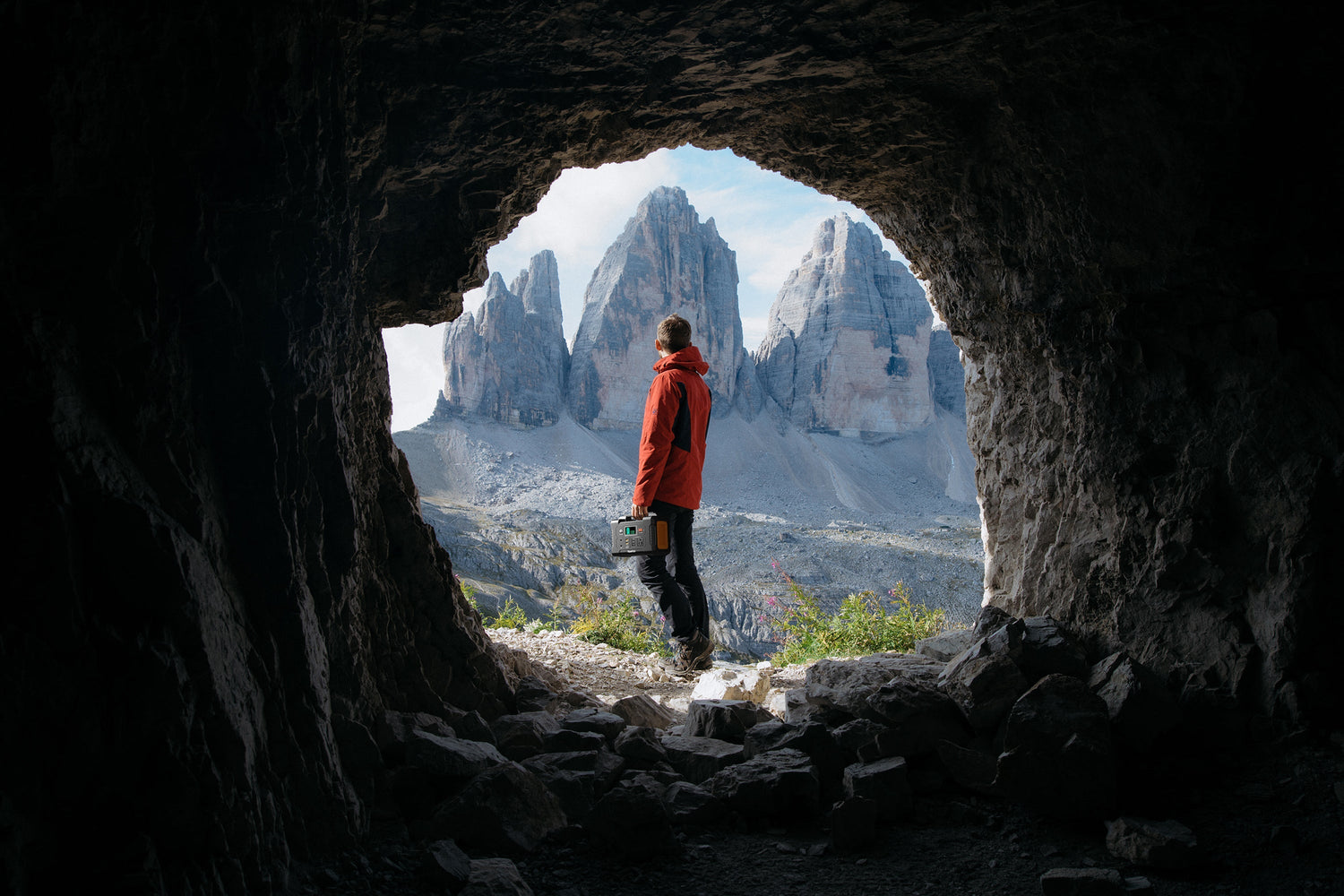
Short answer: a compact station and foldable panel can support phones, cameras, small lights and similar devices at a festival campsite when the load list is modest. Start with device Wh and charger watts, confirm the festival permits the equipment, and treat solar as a variable top-up rather than your only plan.
What “small solar generator” means here
It means a portable battery power station paired with a portable solar panel. The battery stores energy and supplies USB, DC or AC outputs. The panel can replenish some energy in suitable light. It is not a fuel generator, and a 60W panel does not produce 60W in every position or weather condition.
Festival load-planning table
| Item | Information to collect | Planning note |
|---|---|---|
| Phone | Battery Wh or charger watts | Prefer efficient USB charging |
| Camera batteries | Battery Wh and charger input | Count spare batteries and shooting days |
| LED light | Rated watts and hours per night | Low brightness can reduce demand |
| Speaker | Battery size and venue rules | Respect quiet hours and prohibited equipment |
| Solar panel | Voltage, current, connector and station input limit | Compatibility matters more than panel wattage alone |
Compact FlashFish options
E200 for the lightest carry
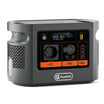
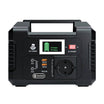
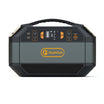
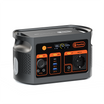
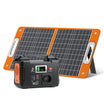
The FlashFish E200 provides 151Wh capacity, 200W continuous AC output and 400W peak output. It weighs 1.85kg. Its compact size fits a phone-camera-light plan, but the modified-sine AC output means sensitive AC equipment should be checked carefully. USB or approved DC charging is preferable when available.
E103 for more capacity and USB-C
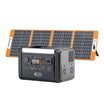
The FlashFish E103 provides 179.2Wh capacity, 300W continuous AC output and USB-C output up to 60W. It weighs 3kg. The local database does not provide its battery chemistry or peak output, so those fields are not used to promote it.
TSP60 for portable solar top-up
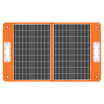
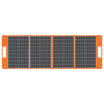
The FlashFish TSP60 is a 60W foldable panel with 18V DC output, USB-C up to 45W and a weight of 1.9kg. Before pairing it, verify station input voltage, current, connector and maximum accepted input.
Step-by-step checklist
- Check the festival's current rules for batteries, panels, campsite equipment and charging.
- List every device and calculate the energy needed for the full stay.
- Choose USB-C or USB-A charging where it avoids unnecessary AC conversion.
- Keep total simultaneous AC watts within the station's continuous output.
- Test every cable and charger at home before departure.
- Carry a weather-independent reserve instead of relying entirely on solar.
- Place the station in a dry, ventilated, secure location away from foot traffic.
- Position the panel only where permitted and where it will not create a trip or access hazard.
How to estimate the battery you need
Add the approximate energy for each device: device battery Wh × expected full charges, plus lights and other loads. Then add a margin for conversion and standby losses. This gives a planning total, not an exact number of charges.
For example, a 10Wh phone charged twice per day for three days represents 60Wh at the phone battery before losses. Cameras, lights and speakers must be added separately.
What this setup should not be asked to do
- Do not plan for cooking, heating or other high-watt appliances without a separate rating check.
- Do not route unprotected cables through wet or high-traffic areas.
- Do not assume a panel will refill the station fully during the event.
- Do not leave valuable equipment unsecured or ignore organiser instructions.
Common mistakes
- Counting device charges but forgetting conversion losses.
- Buying from panel watts without checking voltage and connectors.
- Using AC for devices that can charge efficiently over USB.
- Planning from a sunny forecast with no reserve.
- Assuming festival and ordinary campsite rules are identical.
Frequently asked questions
Is 151Wh or 179.2Wh enough for a weekend?
It depends on the device list. Add device-battery Wh and light usage, then include conversion losses and a reserve.
Can TSP60 fully recharge E200 or E103 in one day?
Do not assume so. Sun, shade, angle, temperature and station input behaviour all affect collected energy.
Can I bring a portable power station into every festival?
No universal rule applies. Check the organiser's current campsite and security policy before travel.
Should I use USB or AC for phones and cameras?
Use a compatible USB output where practical because it can avoid AC conversion. Confirm voltage and charging-protocol compatibility.
Can the setup power a kettle or heater?
Compact stations are generally a poor fit for high-watt heating loads. Check the appliance label and station continuous rating instead of trying it.
Sources and evidence notes
- FlashFish product-source bundle, accessed 3 July 2026, for product facts and missing-field boundaries.
- Camping and Caravanning Club: campsite electricity guide, accessed 3 July 2026, for outdoor electrical planning context.



Laisser un commentaire
Ce site est protégé par hCaptcha, et la Politique de confidentialité et les Conditions de service de hCaptcha s’appliquent.