

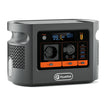
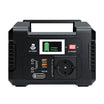

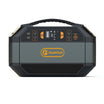
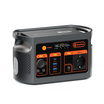


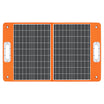
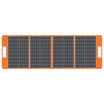


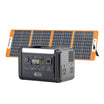

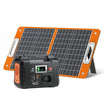

Short answer: choose P66A when low carry mass matters most and the exact laptop can use its approved AC adapter within the documented 200W continuous limit. Choose E106B when the laptop can use a compatible USB-C Power Delivery profile, or when you need more nominal energy and 600W continuous pure-sine AC headroom. Neither choice proves a runtime until the complete kit is measured.
The practical method is CARRY-PATH-HEADROOM: first choose the lightest kit you will actually carry, then verify the laptop charging path, and only then compare energy and continuous output. That order prevents a small station with the wrong USB-C protocol—or a larger station nobody wants to carry—from becoming an expensive mismatch.
Decision table: P66A or E106B?
| Decision factor | P66A | E106B | What it means |
|---|---|---|---|
| Nominal battery energy | 144.34Wh | 384Wh | A capacity label, not delivered laptop runtime. |
| Continuous AC | 200W | 600W pure sine wave | Check the adapter maximum and every simultaneous load. |
| Station mass | 2kg | 5.2kg | P66A saves 3.2kg before cables, laptop and case are added. |
| USB-C path | 18W QC; PD is not documented | USB-C1 up to 100W PD | A matching protocol and cable matter as much as the watt label. |
| Best starting point | Short carry route and modest, verified AC-adapter load | Higher headroom, longer work plan or compatible PD laptop | Confirm with the delivered equipment and a supervised trial. |
Product check: Compare P66A with E106B, then open the E106B details and copy the exact laptop and adapter labels before selecting a path.
Why USB-C shape is not enough
A USB-C connector does not by itself prove laptop charging. The authoritative P66A record identifies its USB-C port as 18W Quick Charge and does not document Power Delivery. E106B identifies USB-C1 as up to 100W Power Delivery, but USB-IF explains that PD power is negotiated: the station, laptop and cable must support a compatible profile. If that evidence is missing, use the laptop manufacturer's approved AC adapter and count its maximum input against the station's continuous AC rating.
Three concrete day-kit examples
- Walk-and-train note-taking kit: the laptop uses its approved compact AC adapter, the verified maximum stays comfortably below 200W and the route makes every kilogram noticeable. P66A is the lighter candidate, but the session still needs a measured energy check.
- USB-C work laptop and external display: the laptop and cable document a compatible PD profile, but the display also needs power. E106B is the stronger candidate because USB-C1 documents up to 100W PD and the station has more AC headroom; verify both loads together.
- Field team with uncertain devices: several laptops may appear and the exact USB-C profiles are not known in advance. Neither model should be promised as universal; collect adapter labels, exclude unsupported equipment and keep a mains or reduced-load fallback.
Build the complete carried-weight and load sheet
| Item | Evidence to record | Decision |
|---|---|---|
| Laptop | Model, USB-C PD profiles or approved adapter input | Direct USB-C, AC adapter or not supported |
| Accessories | Display, router, phone, hub and every simultaneous maximum | Include or remove before testing |
| Carry kit | Station, laptop, adapters, cables and case mass | Comfortable for the actual route |
| Session | Start/end charge, displayed load, warnings and work completed | Observed result, not a calculated promise |
When P66A fits
- The complete carry route rewards the lower 2kg station mass.
- The exact laptop uses an approved AC adapter and the documented simultaneous maximum remains within 200W continuous AC with sensible margin.
- The user accepts that chemistry, AC waveform, frequency and warranty are not supplied by the authoritative local P66A record and will verify any compliance-critical field before relying on it.
When E106B fits
- The laptop and cable support a compatible USB-C PD profile, or the approved AC adapter and accessories benefit from 600W continuous pure-sine AC headroom.
- The plan values 384Wh nominal energy more than the additional 3.2kg station mass.
- The exact work session has been tested with the delivered regional unit and intended accessories.
When neither is a confirmed fit
- The laptop input, cable capability or adapter label is missing.
- The plan assumes nominal Wh equals delivered laptop runtime.
- An unknown monitor, printer, heater or other device is added without its own maximum-load check.
- The workflow requires uninterrupted professional service without a tested fallback.
Frequently asked questions
Can P66A charge a USB-C laptop directly?
Do not assume so. The authoritative P66A record identifies an 18W USB-C QC port, not USB Power Delivery. Check the exact laptop input and use its approved AC adapter when direct USB-C requirements are not explicitly met.
Does E106B work with every 100W USB-C laptop?
No. E106B documents a USB-C1 port up to 100W Power Delivery, but the laptop and cable must support a compatible negotiated profile. Confirm the device requirements and test the exact cable.
Which model is easier to carry?
P66A is documented at 2kg versus 5.2kg for E106B. Add the laptop, adapters, cables and case before deciding whether the weight difference matters to your route.
How long will either model run my laptop?
This guide makes no runtime promise. Laptop demand, charge state, display use, conversion path, background tasks and power-management behaviour all affect measured session energy.
Is the higher-capacity model always the better choice?
No. E106B offers more nominal energy and AC headroom, while P66A reduces carry mass. The better choice depends on the exact charging path, load evidence, route and fallback plan.
Before relying on the kit: ask FlashFish Europe to review your laptop adapter, then have a qualified reviewer observe the delivered equipment.
Sources and evidence limits
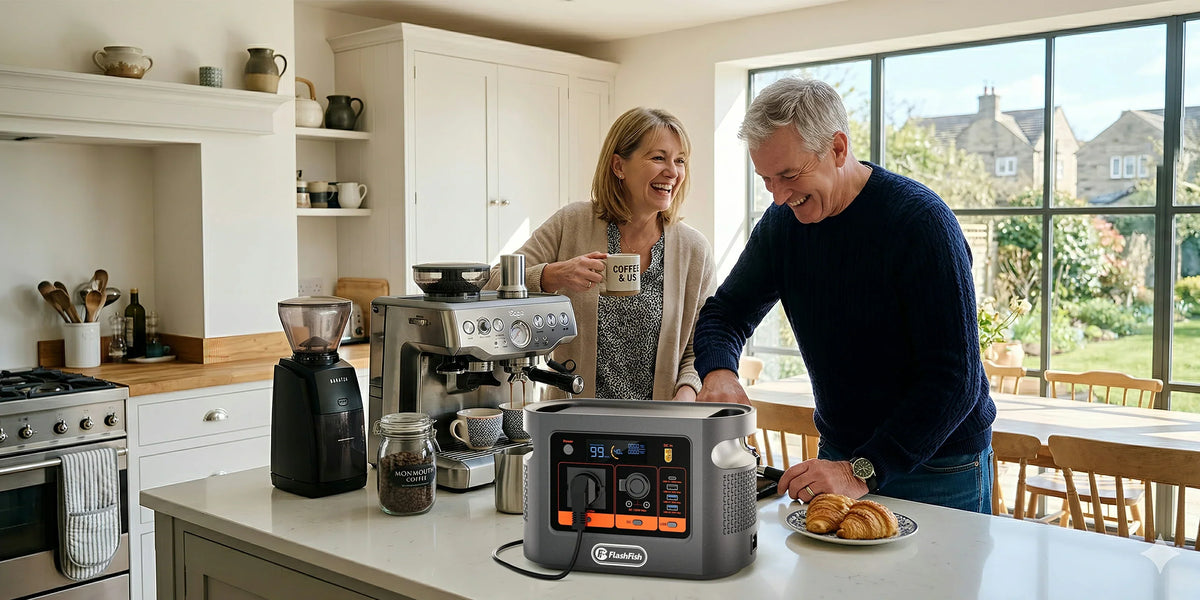
Checked 13 October 2026. P66A and E106B specifications come from the authoritative local product records and current Europe pages. USB-IF supplies general Power Delivery context, and Electrical Safety First supplies general lead-management boundaries. FlashFish publishes this comparison. No laptop, cable, adapter combination, session energy, runtime or thermal result was tested for the article; the image shows E106B in a workspace and is not a side-by-side comparison.



Laat een reactie achter
Deze site wordt beschermd door hCaptcha en het privacybeleid en de servicevoorwaarden van hCaptcha zijn van toepassing.