

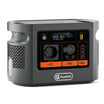
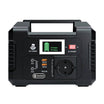

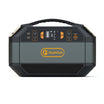
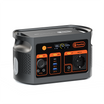






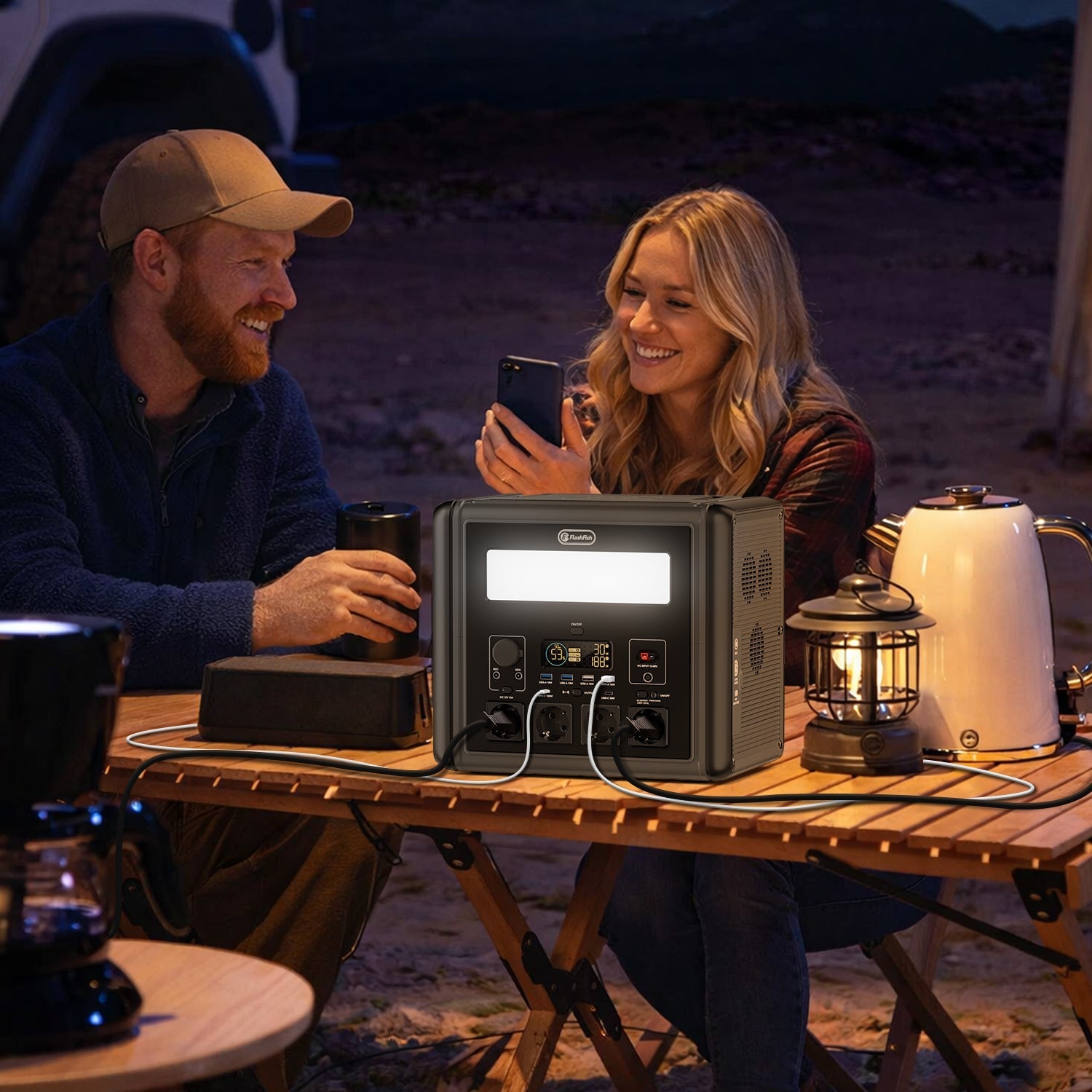
Short answer: not as a universal rule. The right storage charge depends on the exact model and on whether you are preparing for an emergency tomorrow or putting the station away for months. Official guidance differs: Health Canada uses about 50% for long-term lithium-ion storage, one EcoFlow manual returns its model to 60%, and the local FlashFish SR5000 record specifies 40–70%. The local FlashFish database provides no long-term storage percentage for T1200S or T2000, so this article does not invent one.
The dependable method is manufacturer-first: define the storage goal, read the exact current manual, record the date and charge state, store the unit in a dry moderate location, and check it on the documented schedule.
Two reasonable goals can point to different charge levels
Emergency readiness asks, “How much energy will be available if the grid fails soon?” A fuller battery can provide more starting energy. Long-term storage care asks, “What state and maintenance schedule does this manufacturer specify while the product is idle?” That answer may be a partial charge.
Neither goal excuses ignoring the manual. A backup plan that stores less energy than the household needs is weak. A seasonal-storage plan that leaves a product indefinitely without inspection is also weak. Write down which job the station must do and when it is expected to return to service.
“LiFePO4” is not a complete storage instruction. Battery chemistry matters, but the product also contains a battery-management system, inverter, display, standby electronics and firmware. The product maker defines the approved procedure for the assembled unit.
Official guidance is not one universal percentage
| Source or model | Storage guidance found | Correct use of the evidence |
|---|---|---|
| Health Canada lithium-ion guidance | About 50% for long-term storage; check every three months and return to about 50% | A general safety baseline; exact product instructions still control |
| EcoFlow RIVER 3 Plus Wireless manual | Every three months, charge fully, discharge to 60%, then continue storage | A model-specific example showing that 60% is not a universal number |
| FlashFish SR5000 local manual record | 40–70% for long-term storage; recharge every three months | Use only for SR5000 after checking the current regional manual |
| FlashFish A101 local record | Charge before storage; recharge when remaining energy is below 10% | Follow as A101-specific wording; it does not define a mid-range target |
| FlashFish E200 local record | Periodic charge every three months or at least every six months | Use as a maintenance interval, not as evidence of an unstated percentage |
| FlashFish T1200S and T2000 local records | No long-term storage percentage provided in the database | Check the current Europe manual or ask FlashFish support |
This table is deliberately inconsistent because the source instructions are different. The wrong response would be to average them. The useful response is to identify the exact model and use its own current instruction.
Why “always keep it at 100%” is weak advice
It confuses preparedness with storage. A person preparing for a forecast storm may reasonably prioritise available energy. Someone storing equipment between camping seasons has a different timeline. A product manual can also require periodic cycling, a particular range or a recharge threshold.
The opposite shortcut—“always store at 50%”—is also weak. Health Canada's general figure is valuable context, but it does not override a model manual that specifies a different target or maintenance process.
A storage routine you can audit later
- Identify the complete model and region. Photograph the rating label and save the current manual. Similar product names can have different outlets, firmware or instructions.
- Choose the goal. Record “emergency-ready” or “long-term storage” and the planned return-to-use date.
- Apply only the model instruction. If the manual gives a range, do not replace it with an internet rule. If it gives no value, ask support.
- Shut down as directed. Disconnect loads and charging sources, allow the unit to cool and inspect the case, cable and ports.
- Choose a dry, moderate location. Keep the station away from direct sunlight, vehicles with temperature extremes, moisture, soft materials that trap heat and combustible clutter.
- Label the date and charge state. A paper tag or calendar entry is more useful than relying on memory.
- Inspect on schedule. Check for swelling, damage, odour, moisture, error messages and unexpected charge loss. Stop using a damaged unit and follow manufacturer support instructions.
- Recommission deliberately. Bring the unit into its permitted operating environment, inspect it and perform any manual-required charge or function check before depending on it.
Three months is a prompt, not a universal rule
Health Canada, the EcoFlow example and the local SR5000 record each use a three-month check, making a quarterly reminder a sensible way to avoid forgetting stored equipment. But the exact model manual may use another interval. A quarterly calendar prompt can say “check the manual and inspect,” rather than “charge every product to the same number.”
Record what you observed. Unexpected rapid charge loss, physical change or repeated warning states are reasons to stop and contact support, not reasons to keep cycling the unit until it appears normal.
When FlashFish fits and when it does not
A T1200S or T2000 can fit a portable-power plan when its capacity, continuous output, ports and carry weight match the intended loads. Storage discipline is a separate ownership requirement. The local database identifies both as LiFePO4 products, but it does not provide their long-term storage percentages.
Do not choose or keep a station where the plan requires an undocumented storage state, the location is damp or temperature-uncontrolled, the unit cannot be inspected, or the owner will ignore model-specific maintenance. Compare the FlashFish portable power station range only after load needs and the ownership routine are both clear.
Frequently asked questions
Is 100% charge bad for storing every portable power station?
There is no universal answer. Use the exact model manual because official targets differ, and long-term battery care may conflict with immediate emergency readiness.
What storage percentage should I use for T1200S or T2000?
The local FlashFish product database does not provide a long-term storage percentage for those two models. Check the current Europe manual or ask FlashFish support rather than borrowing another model's number.
How often should I check a stored power station?
Use the model manual. A three-month calendar is a useful prompt because several official sources use quarterly checks, but the action and target remain model-specific.
Should emergency backup be stored differently from seasonal equipment?
Possibly. Emergency readiness values available energy, while long-term storage guidance may specify a partial charge. Record the purpose and follow the exact manual.
Where should a portable power station be stored?
Use the model manual and choose a dry, moderate, ventilated location away from direct sun, temperature extremes, moisture, children and combustible clutter.
Sources and evidence limits
- Health Canada lithium-ion battery safety – general storage location, inspection and long-term charge guidance.
- EcoFlow RIVER 3 Plus Wireless Europe manual – one manufacturer-specific maintenance example.
- FlashFish product-source bundle – SR5000, A101, E200, T1200S and T2000 records.
- FlashFish Europe portable power stations – current store context.
No long-term storage test was performed. Confirm the current regional manual before setting a charge target.

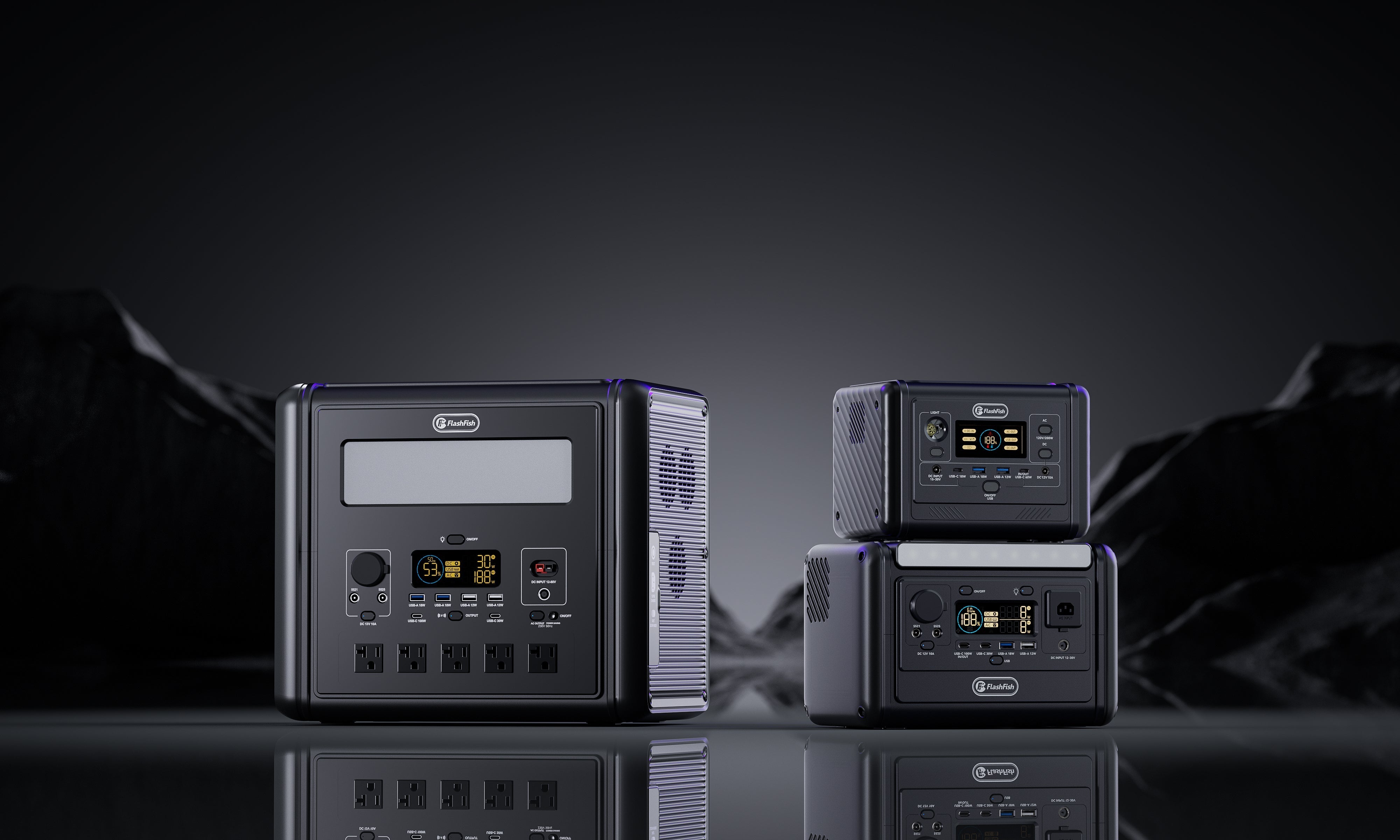



Laisser un commentaire
Ce site est protégé par hCaptcha, et la Politique de confidentialité et les Conditions de service de hCaptcha s’appliquent.