

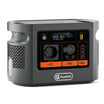
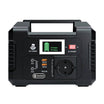

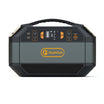
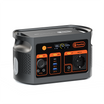


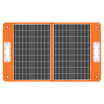
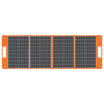


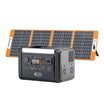

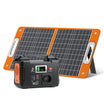


Short answer: use a compact station for a small, verified list of information and lighting loads, not as a vague promise to power an entire emergency. For the E200, identify the exact radio, efficient lamps and phone cables; match each to a documented port; keep the total below the relevant limit; reserve energy; and maintain battery-powered alternatives.
Build the plan around information and safe movement
GOV.UK's Prepare guidance recommends keeping a battery or wind-up torch and radio available for power cuts and following official information. A charged phone is useful, but electricity at the handset does not guarantee that mobile towers, broadband equipment or local networks remain available. That is why a resilient kit uses more than one information route.
| Priority | Main item | Independent fallback | What power cannot guarantee |
|---|---|---|---|
| Official information | Low-power radio or phone | Battery or wind-up radio | Broadcast, mobile or internet availability. |
| Safe movement | Efficient USB or low-watt lamp | Battery torch per person | Whole-room or outdoor safety. |
| Communication | Phone charging cable | Written contacts and local meeting plan | A connection to emergency services. |
What the E200 can and cannot be assumed to do
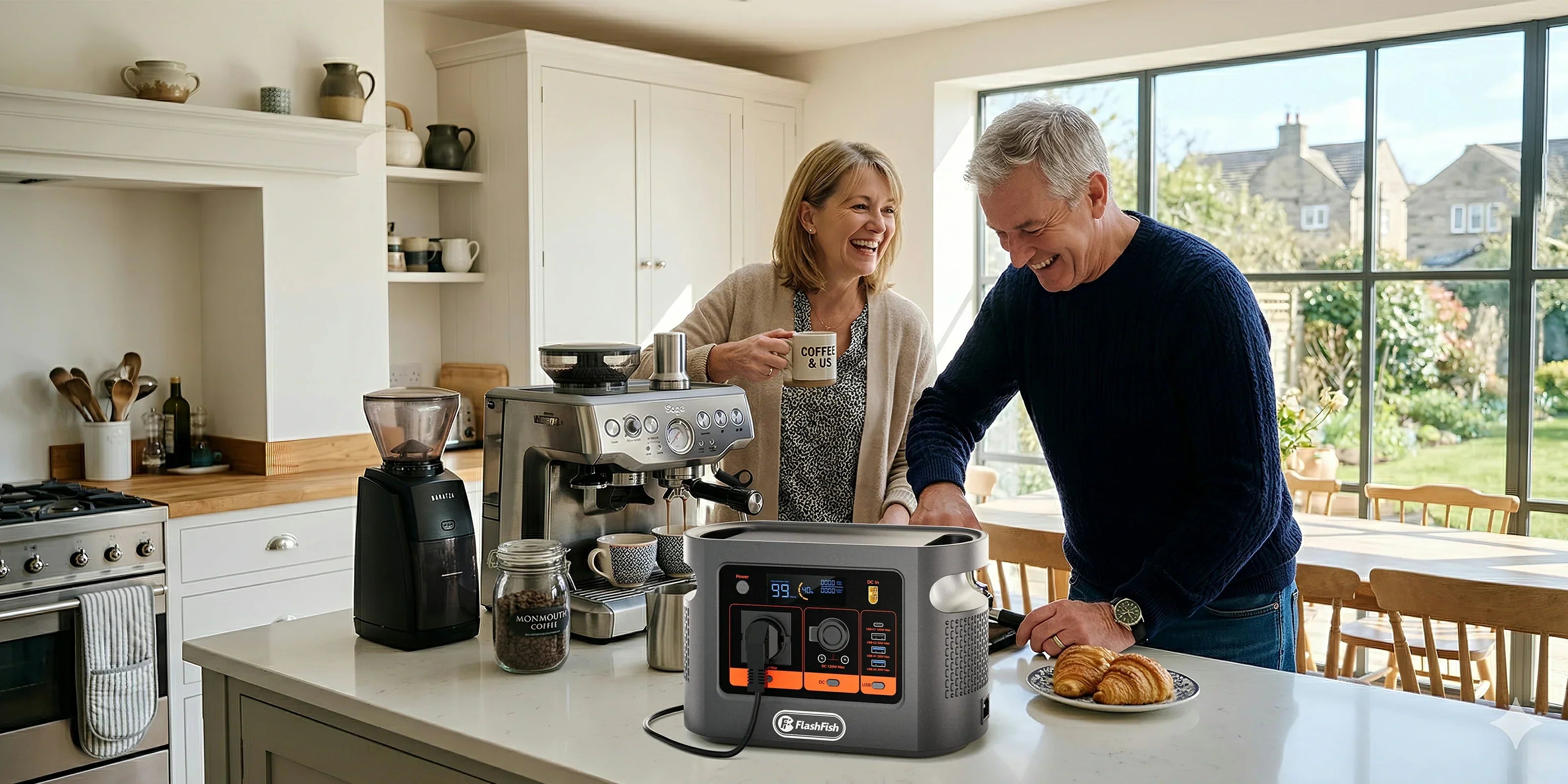
The local manual-derived product record lists a 151Wh lithium-ion battery, 200W continuous and 400W peak modified-sine AC output, two 18W USB-A outputs, one 12W USB-A output and a 12V/10A DC output capped at 120W. It weighs 1.85kg. It does not list USB-C.
Those values establish planning boundaries, not results. Modified-sine AC may be unsuitable for some sensitive equipment, and the local record warns against long-term AC motor loads such as refrigerators or compressors. This low-load checklist deliberately avoids those uses. Check the exact device instructions and prefer its native low-voltage input when documented and practical.
Use a port-by-port load worksheet
| Item | Record from the real device | Likely E200 route to verify | Stop condition |
|---|---|---|---|
| Radio | Input volts, amps/watts, plug and battery option | USB-A, 12V DC or AC only if documented | Unknown polarity, sensitive AC requirement or no independent batteries. |
| LED light | Rated input and actual number used | USB-A or documented DC/AC input | Combined load is guessed from bulb count. |
| Phone | Cable ends and supported charging input | USB-A cable | The plan assumes USB-C PD or a cable not in the kit. |
| All simultaneous loads | Watts by port plus a reserve | Check each port and total AC/DC limits | Daisy chains, damaged cables or an exact-limit plan with no margin. |
Electrical Safety First advises users to check the combined load on extension equipment, avoid daisy chaining and replace damaged leads. A station's total output rating does not make an overloaded adaptor safe.
Plan energy without promising runtime
- List only the loads required for information, communication and safe movement.
- Measure or document average watts for each actual operating mode.
- Estimate energy as watts multiplied by hours, then add conversion losses and a reserve.
- Schedule use instead of running every lamp continuously.
- Set a minimum remaining-charge trigger for switching to the independent fallbacks.
Do not divide 151Wh by a device label and publish the result as a guarantee. Labels may be maximums, loads can cycle, AC conversion consumes energy, temperature and battery condition matter, and draining to zero removes resilience.
When the E200 fits - and when it does not
E200 may fit a deliberately small kit when every item is verified against the correct USB-A, DC or AC output; simultaneous loads stay inside documented limits; the modified-sine output is acceptable to any AC device; and battery fallbacks remain available.
E200 does not fit this plan when the requirement includes a refrigerator, compressor, whole-home circuit, unknown sensitive AC equipment, medical continuity, an automatic switchover promise or exposure to rain and splashes. Choose a different documented system or professional plan rather than stretching a compact station beyond its evidence.
Pack and rehearse the kit
- Label every cable with its device and keep one known-working spare for the phone.
- Store the station dry and ventilated; inspect cables and connectors before use.
- Keep radio batteries and torches separate so one station fault does not remove every option.
- Test the actual item list while mains power and daylight are available.
- Review local official power-cut guidance and emergency contact procedures.
Frequently asked questions
Can the E200 charge a USB-C phone?
E200 has USB-A outputs rather than USB-C. A phone may charge with an appropriate USB-A cable if its requirements fit, but USB-C PD speed is not available from this model.
Can the E200 run an emergency radio?
It may power or charge the exact radio when the radio input matches an E200 output and the combined load remains within the documented limits. A battery or wind-up radio remains useful redundancy.
How many lights can I connect to E200?
Do not choose by count alone. Add the actual wattage of every light and other simultaneous load, select the correct output and keep a reserve.
Will a powered phone still have mobile or internet service?
Not necessarily. Local network infrastructure can also lose service or become congested, so keep a radio and official local information plan.
Is E200 suitable for a refrigerator or medical device?
This checklist does not recommend it for either. The local record warns against long-term AC motor loads, and medical equipment requires manufacturer and professional continuity planning.
Sources and evidence limits
- GOV.UK Prepare: power cuts - official information, torch and radio preparedness.
- Electrical Safety First - extension-load, daisy-chain and cable safety.
- FlashFish E200 Europe page and local product database - model-specific product and port context.
No radio, lamp, phone or communications network was tested. This is a small-load preparedness worksheet, not medical, whole-home or emergency-services continuity advice.




Laisser un commentaire
Ce site est protégé par hCaptcha, et la Politique de confidentialité et les Conditions de service de hCaptcha s’appliquent.