

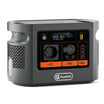
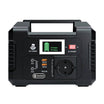

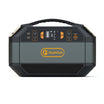
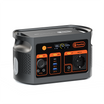


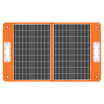
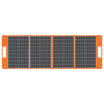


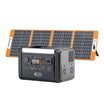

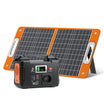

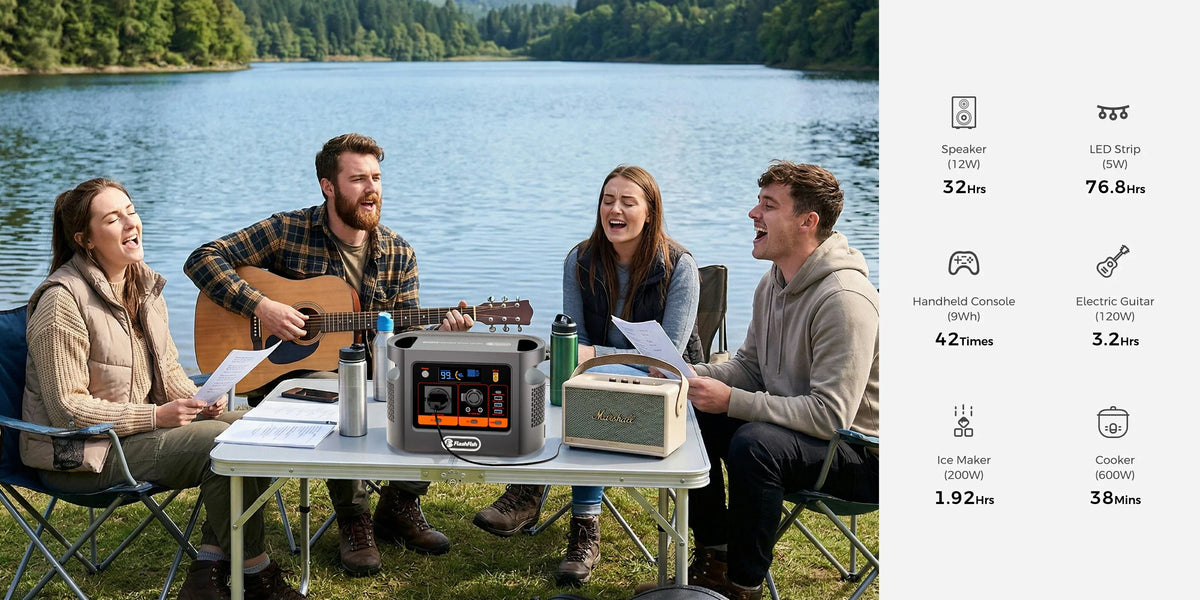
Short answer: choose FlashFish E106B when the camping kit includes a verified 230V AC load or when 384Wh of nominal energy justifies carrying about 5.2kg. Choose EcoFlow TRAIL 300 DC when every device has a compatible USB-C, USB-A or 12V path and its much lower 2.58kg mass matters more. Neither is the universal winner.
This is an AC-versus-DC decision before it is a brand decision. TRAIL 300 DC deliberately removes the inverter and AC socket. E106B keeps a 600W pure-sine AC path and more nominal energy. The right choice follows the devices and cables already in the kit, not the largest headline watt figure.
In this guide: specification table · CAMP PATH method · fit and non-fit · three buyer profiles · FAQ
E106B versus TRAIL 300 DC: equal-field comparison
| Field | FlashFish E106B | EcoFlow TRAIL 300 DC | Decision meaning |
|---|---|---|---|
| Nominal energy | 384Wh | 288Wh | E106B stores more label-level energy; neither figure is delivered-energy proof. |
| AC output | 230V, 50Hz EU version; pure sine; 600W shared maximum | None | Any required AC appliance makes this the first decisive split. |
| USB-C | 100W maximum plus 30W maximum | Two ports up to 140W each; total-product limits still apply | TRAIL favours higher-power USB-C paths; device and cable negotiation still govern. |
| 12V output | DC5521 pair plus car output; 120W shared maximum | Car outlet, 120W maximum | Connector, polarity and exact device demand decide fit. |
| Total output concept | AC has a documented 600W shared ceiling; other groups retain their stated limits | 300W total DC; 140W maximum one single port | Do not add every port headline as if each maximum were simultaneous. |
| Mass | About 5.2kg | 2.58kg | TRAIL is about 2.62kg lighter before accessories. |
| Dimensions | 306 × 171 × 202mm | 167 × 115 × 166mm | TRAIL occupies less pack space; test the full kit, not the station alone. |
| Input examples | AC up to 250W; solar/DC up to 200W | USB-C input up to 140W; solar/car input up to 110W | Compare available charging sources and included/required cables. |
| Authoritative evidence gap | Local record does not supply chemistry or peak AC output | Manufacturer specifications only; no shared field test here | Do not fill missing fields from a related model or marketing assumption. |
Use CAMP PATH for the decision
C — Complete device list: list every phone, laptop, camera, light, cooler, pump and accessory. Record what must run at the same time.
A — AC requirement: circle any device that only accepts 230V AC through its original adapter. If one essential load has no documented DC alternative, TRAIL 300 DC is not a fit for that load.
M — Match each power path: for USB-C, match source profile, sink profile and cable rating. For 12V, match voltage, current, connector and polarity. Connector shape alone is not compatibility.
P — Power and energy: total simultaneous watts within each output group, then measure watt-hours over the intended session. Keep continuous power and stored energy as separate checks.
P — Port sharing: respect the product-level and group-level limits. E106B's 12V outputs share 120W. TRAIL 300 DC lists 300W total DC and 140W maximum from one port.
A — Accessories: include chargers, solar leads, adapters and any separately sold cable in the price, mass and packing plan. A missing cable can erase the apparent convenience of a port.
T — Transport: compare the complete carried kit. The station mass difference is large, but an AC charger, solar panel or spare adapters also matter.
H — Headroom and stop rules: avoid a plan that sits at a ceiling or depends on an undocumented surge, profile or connector. Step away when the evidence for an essential device is missing.
Where FlashFish fits—and where TRAIL may fit better
| Choose E106B as the stronger starting point when | Choose TRAIL 300 DC as the stronger starting point when |
|---|---|
| An essential device genuinely needs compatible 230V AC. | The entire kit is verified USB-C, USB-A or 12V DC. |
| 384Wh nominal energy is needed after a measured load plan. | 288Wh fits the measured session and lower carry mass is decisive. |
| A 100W USB-C path is enough and AC flexibility is valuable. | A compatible device benefits from the documented 140W USB-C path. |
| About 5.2kg plus accessories is acceptable. | A 2.58kg station materially improves walking or packing comfort. |
E106B does not fit when the user needs proof of battery chemistry or peak AC output from the authoritative local record, when 600W is too small for the verified AC load, or when the weight is unreasonable. TRAIL 300 DC does not fit when any essential load requires AC or when a claimed 140W USB-C path is not accepted by the device and cable.
Three concrete buyer profiles
1. Laptop, two phones and camera batteries
If the laptop accepts a compatible USB-C profile and every camera charger has a verified USB or 12V route, TRAIL 300 DC starts with a strong weight advantage. If one camera charger or laptop workflow still requires AC, E106B becomes the practical candidate.
2. Camping light, router and a small AC-only appliance
The AC-only appliance makes E106B the relevant product class, provided its input and any startup behaviour remain comfortably inside the documented output. TRAIL 300 DC cannot power the AC device because it has no AC outlet.
3. Long walk to a tent site with USB-C devices only
TRAIL 300 DC's 2.58kg mass can be more valuable than carrying extra nominal energy and an unused inverter. The buyer should still verify every cable, multi-port limit and energy requirement rather than assuming the lighter station completes the kit automatically.
What this comparison deliberately excludes
- No current-price winner; price changes and included accessories require a same-day checkout comparison.
- No runtime winner; neither nominal capacity is treated as delivered device energy.
- No efficiency winner; EcoFlow's published efficiency claims are not a shared independent test.
- No chemistry comparison; the authoritative local E106B record leaves chemistry blank.
- No durability or reliability conclusion; both sides rely on manufacturer specifications here.
- No universal best claim; the result depends on the exact power paths and carry constraints.
If an AC path survives the checklist, check whether the current E106B ports match your camping kit. Verify the delivered EU unit and every device label before purchase.
FAQ
Is E106B an EcoFlow TRAIL 300 DC alternative?
Yes for buyers who need a compact camping battery, but the products solve different power paths. E106B adds 230V AC and more nominal energy; TRAIL 300 DC is much lighter and is built around USB-C and 12V DC.
Which one can run a normal 230V appliance?
E106B has a documented 230V pure-sine AC outlet for compatible loads within its limit. TRAIL 300 DC is a DC-only product and should not be selected for an AC appliance.
Which one is easier to carry?
The official figures list TRAIL 300 DC at 2.58kg and E106B at about 5.2kg. The complete carry comparison must also include chargers, solar leads and device cables.
Does TRAIL 300 DC's 140W USB-C guarantee 140W laptop charging?
No. The laptop, source port, cable and USB Power Delivery profile must all agree, and shared or simultaneous limits still need checking.
Which product has longer camping runtime?
No fixed winner is claimed. E106B has more nominal energy, but delivered energy depends on the output path, conversion, load, temperature and station overhead. Measure the exact kit.
Conclusion
E106B is the stronger paper fit when camping still includes a verified AC load or when the measured energy plan needs more than 288Wh nominal. TRAIL 300 DC is the stronger paper fit when every load is genuinely DC and saving about 2.62kg matters. Use the same device list for both, then compare active camping power stations by the same load sheet instead of choosing from brand or watts alone.
Sources and editorial notes
FlashFish fields come from the authoritative local E106B manual-derived record and current Europe page. EcoFlow fields come from the official TRAIL Series page. USB-C boundaries use USB-IF Power Delivery guidance. No side-by-side test, price comparison, efficiency measurement, delivered-energy test, runtime, reliability result or universal recommendation is claimed.



Laisser un commentaire
Ce site est protégé par hCaptcha, et la Politique de confidentialité et les Conditions de service de hCaptcha s’appliquent.